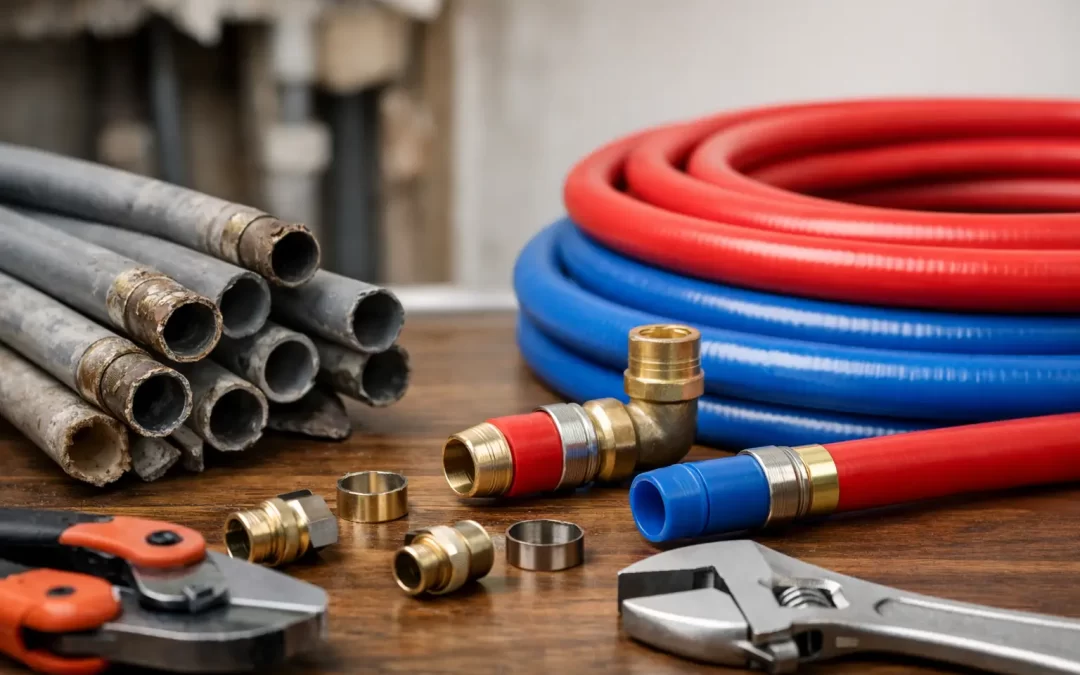
Nobody plans for a whole-house repipe. It usually starts with a small leak, a damp spot under the floor, or a plumber pointing out that the gray polybutylene lines in the home are a known failure risk. When homeowners ask about polybutylene pipe replacement cost, what they really want to know is how bad the damage will be to the budget and whether doing it now is smarter than waiting.
The honest answer is that cost depends on the size of the house, the layout, the number of fixtures, the accessibility of the plumbing, and the material being installed. But there are still useful price ranges and clear reasons why one quote may come in much higher or lower than another.
What does polybutylene pipe replacement cost?
For many single-family homes, polybutylene pipe replacement cost falls somewhere between about $4,500 and $15,000. Smaller homes with easier access and straightforward layouts will usually land on the lower end. Larger homes, two-story homes, and homes with more bathrooms or difficult access points often cost more.
That is a wide range, but whole-house repiping is not a one-size-fits-all project. A 1,200-square-foot ranch with one and a half bathrooms is a very different job than a 3,500-square-foot home with multiple bathrooms, a laundry room on the second floor, and plumbing lines behind finished walls and ceilings.
If a home only has a short section of polybutylene left, the price may be lower. But in many cases, partial replacement is not the best long-term move. When the pipe material itself is the problem, replacing only the section that has already failed can leave the rest of the house vulnerable to the next leak.
Why prices vary so much
The biggest factor is usually the scope of the repipe. More fixtures mean more connections, more labor, and more time. Kitchens, bathrooms, hose bibs, laundry rooms, and water heater connections all add to the total work involved.
Access also matters. A home with an open basement or crawl space is generally easier to repipe than a house built on a slab with plumbing routed through finished walls. Two-story homes can be more involved because of the extra routing and wall access needed to serve upstairs fixtures. Price also varies if the repipe specialist does the drywall repair as well as the plumbing.
The replacement pipe material also affects price. Most homeowners replacing polybutylene today choose PEX, often PEX A or PEX B, because it is durable, cost-effective, and well suited for full repipes. The exact price difference between systems is usually smaller than the difference created by labor and access, but material choice still plays a role.
Drywall opening and repair can also change the final number. Some repipe specialists are able to limit wall cuts by rerouting lines strategically, while others may need more access to complete the work. A lower plumbing quote is not always a lower overall project cost if it leaves the homeowner with more patching and repainting afterward.
Cost by home type and size
A smaller home with one bathroom and easy access may fall in the lower part of the range. Think roughly $4,500 to $7,000 in favorable conditions. A mid-size home with two bathrooms often lands somewhere in the middle, commonly around $7,000 to $10,500.
Larger homes with multiple bathrooms, more fixtures, and more complicated layouts can run from $10,500 to $15,000 or more. High-end homes or homes with unusual plumbing routes may go beyond that.
That said, square footage alone does not tell the whole story. A compact two-story house can be more challenging than a larger one-story home with a crawl space. Fixture count and access usually matter just as much as the total size of the home.
What should be included in the price?
A good repipe quote should reflect the full plumbing scope, not just the pipe itself. Price from a true specialist also includes drywall repair and paint. Homeowners should expect pricing to account for removing old supply lines from service, installing the new water distribution system, reconnecting fixtures, and testing the system when the work is complete.
It should also be clear what kind of pipe is being used, whether shutoff valves and supply stops are included, and how wall access will be handled. If one estimate looks surprisingly cheap, it is worth asking what has been left out.
This is where experience matters. A contractor who specializes in repipes usually prices them more accurately because they know how to plan routes, reduce disruption, and avoid the small surprises that can turn into expensive change orders.
PEX A vs. PEX B and cost differences
If you are replacing polybutylene, chances are the conversation will include PEX A and PEX B. Both are common options, and both can be solid choices when installed correctly.
PEX A is more flexible and often easier to run through tight spaces, which can help in complex repipe projects. It also uses expansion-style connections. PEX B is typically a little stiffer and often uses crimp-style fittings. In some homes, PEX B may be the more budget-friendly option. In others, the labor advantages of PEX A can make the price difference less dramatic than homeowners expect.
The best choice is not always the cheapest material on paper. It depends on the house, the routing, and the installer’s system. What matters most is getting a properly designed, professionally installed repipe that solves the failure risk of polybutylene for the long term.
Is replacing polybutylene worth the cost?
For many homeowners, yes. Polybutylene has a long history of unexpected failures, especially as the pipe ages. Waiting until there is a major leak can mean paying not only for emergency plumbing work, but also for flooring, drywall, cabinetry, and personal property damage.
That is why many homeowners choose to replace it proactively instead of reacting to repeated leaks. The upfront cost can feel significant, but it often buys peace of mind, more reliable water service, and fewer repair surprises.
There can also be practical day-to-day benefits. A properly planned repipe may improve water flow, provide more dependable shutoffs, and eliminate weak points in an aging plumbing system. For homeowners planning to stay in the property, that long-term reliability matters.
How to compare repipe quotes without getting burned
Price matters, but it should not be the only thing driving the decision. If you are comparing estimates, look closely at experience with polybutylene replacement specifically. Whole-house repipes are a different kind of project than basic plumbing repair work.
Ask what piping material is being proposed and why. Ask how the crew plans to route lines through the house and how much disruption to expect. Ask whether the company stands behind the work with a warranty and whether they are licensed and insured.
A very low quote can sometimes mean corners are being cut on materials, crew experience, fixture reconnections, or project planning. On the other hand, the highest quote is not automatically the best either. The goal is to find a company that does this kind of work regularly, explains the process clearly, and gives you a realistic price upfront.
When timing changes the cost
If a homeowner is already opening walls for a remodel, replacing polybutylene at the same time can sometimes make financial sense. Access is easier, and it may reduce duplicate labor later. If the house has already had a few leaks, delaying often gets more expensive, not less.
Emergency situations also tend to cost more in indirect ways. Even if the repipe price itself stays similar, the added damage from a burst or hidden leak can raise the overall cost of waiting.
In North Georgia and Metro Atlanta, many older homes still have these systems in place, and homeowners are often balancing the repipe cost against the risk of repeated repairs. That decision usually becomes easier after the second or third leak.
A realistic way to think about the investment
The best way to view polybutylene pipe replacement cost is as a risk-reduction project, not just a plumbing bill. You are not paying only for new pipe. You are paying to remove an aging material with a known failure history and replace it with a modern system built for long-term reliability.
For homeowners who want the job done quickly and correctly, working with a repipe specialist can make a real difference. Companies like Greenlee Plumbing that handle polybutylene replacement regularly are typically better equipped to price the work accurately, keep disruption down, and complete the job efficiently.
If your home still has polybutylene, the cheapest path is not always to wait for the next leak. Sometimes the smartest money is spent before water ends up where it does not belong.

Recent Comments