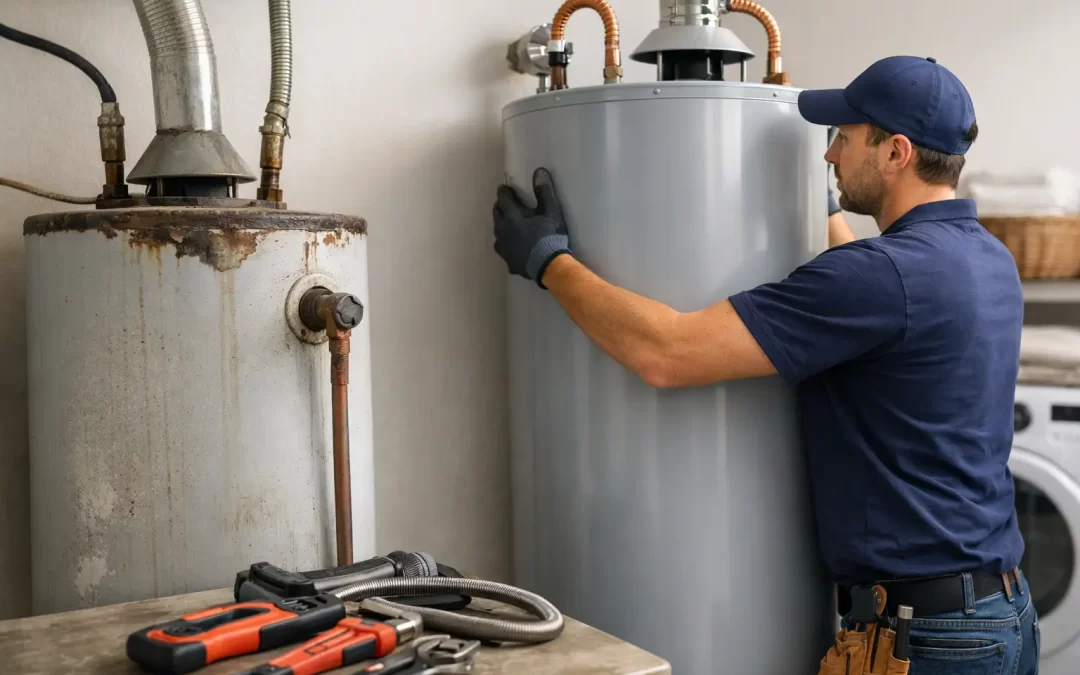
Nobody wants to find out they need a water heater replacement because there is rusty water in the tub, a puddle in the garage, or no hot water before work. The problem is that water heaters usually give some warning before they fail. If you know what to watch for, you can replace the unit on your schedule instead of dealing with water damage and an emergency call.
Signs you may need water heater replacement
Age is one of the biggest clues. Most standard tank water heaters last around 10 to 15 years, depending on water quality, maintenance, and how heavily the system is used. If your unit is getting into that range and starting to act up, repairs may only buy you a little time.
Performance issues also matter. If your hot water runs out faster than it used to, temperatures swing from hot to cold, or recovery time feels slow, the unit may be wearing out. In some homes, sediment buildup inside the tank causes rumbling noises, reduced efficiency, and extra stress on the system.
Leaks are another major warning sign. A small drip from a fitting might be repairable, but water coming from the tank itself usually means replacement is the right move. Once the tank body starts failing, it does not get better.
Discolored hot water can point to corrosion inside the tank. If only the hot water looks rusty, the water heater is a likely suspect. That does not always mean immediate failure, but it should be checked quickly.
Repair or replace?
This is where experience matters. Not every water heater problem means you need a new unit. A bad thermostat, heating element, or pilot issue may be repairable if the tank is still in solid shape. But if the unit is older, inefficient, or showing signs of tank corrosion, putting money into repeated repairs often stops making sense.
A good rule is to look at the full picture: age, repair history, energy use, and risk of failure. If the heater is near the end of its lifespan and the repair is significant, replacement is usually the better long-term value. Homeowners and property managers often save money by avoiding repeat service calls and the risk of a sudden leak.
Choosing the right replacement water heater
The best replacement is not always the biggest one. It needs to match the household size, hot water demand, and the home’s plumbing setup. A family of five with back-to-back showers has different needs than a smaller household with lower demand.
For many homes, a standard tank water heater is still the most practical option. It has a lower upfront cost and works well when sized correctly. Tankless systems can be a strong choice too, especially for homeowners who want energy savings and endless hot water, but they are not right for every house. The installation requirements, usage patterns, and budget all need to line up.
Fuel type also matters. Gas and electric units perform differently, and the best choice often depends on what the home already has in place. In older homes with aging plumbing, it also makes sense to look at the condition of the shutoff valves, supply lines, and nearby piping during replacement.
What to expect during a water heater replacement
A professional water heater replacement should be straightforward when handled by an experienced plumber. The old unit is disconnected and removed, the connections are checked, and the new heater is installed with proper sizing and safe, reliable hookups.
In some cases, replacing the heater reveals other issues nearby, especially in older homes. Corroded valves, worn supply lines, or outdated piping can affect how well the new unit performs. That is one reason it helps to work with a plumbing company that looks at the whole system instead of only swapping the tank and leaving hidden problems behind.
For homeowners in North Georgia and Metro Atlanta, hard water and older plumbing systems can shorten equipment life. If your home has galvanized, older copper, or polybutylene piping, the water heater may not be the only part of the system worth evaluating.
How a new water heater can improve your home
The biggest benefit is reliability. You want consistent hot water when you shower, wash clothes, or run the dishwasher. A new unit can also improve efficiency, which may lower monthly utility costs compared with an older heater that has to work harder to do the same job.
Replacement can also reduce the risk of leaks and water damage. Waiting too long is where many homeowners get burned. A failing tank can go from manageable to messy fast.
There is also the comfort factor. Better recovery time, steadier temperatures, and enough hot water for the household make a noticeable difference day to day. For rental properties and multifamily units, that reliability matters even more because hot water complaints need quick solutions.
When to call a plumber
If your water heater is over 10 years old, leaking, making loud noises, or struggling to keep up, it is time to have it checked. The goal is not to replace equipment early for no reason. It is to catch a failing unit before it creates a bigger problem.
Greenlee Plumbing helps homeowners and property managers make that call based on the condition of the system, not guesswork. If you are weighing repair against replacement, the smartest next step is a clear assessment and an upfront estimate so you know exactly what you are dealing with.

Recent Comments