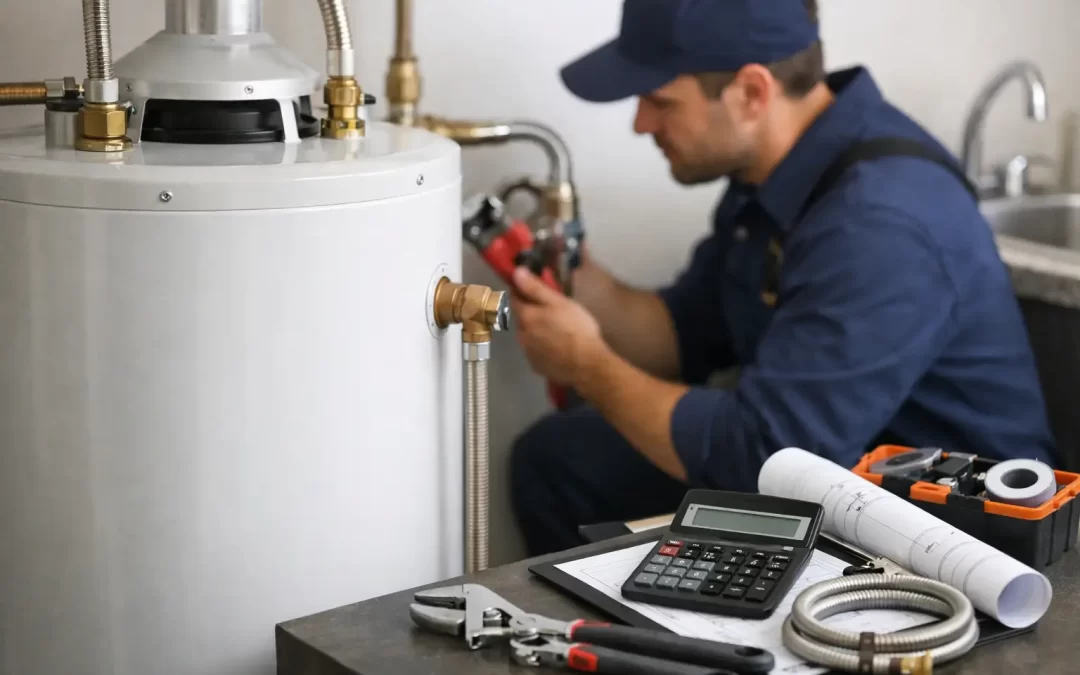
Replacing a water heater usually gets urgent the moment the hot water turns cold, the tank starts leaking, or the utility room smells like metal and moisture. At that point, most homeowners are asking the same question: what is a fair water heater installation cost, and what exactly are you paying for?
The short answer is that the price can vary quite a bit based on the type of heater, the fuel source, the size of the unit, and the condition of the plumbing around it. A straightforward replacement is usually far less expensive than an installation that also involves upgrading old valves, replacing worn supply lines, or correcting issues left behind by an older setup. If you understand where the money goes, it gets much easier to compare estimates and avoid surprises.
What affects water heater installation cost?
The biggest factor is the kind of water heater you are installing. A standard tank water heater is typically the most budget-friendly option upfront. A tankless unit usually costs more to install, but it can make sense for households that want endless hot water, better energy efficiency, or more space.
Fuel type matters too. Electric water heaters are often simpler to replace when the home already has the right setup. Gas water heaters can cost more because the installation is more involved and every connection has to be done correctly for safe operation. If you are switching from one fuel type to another, the price increases quickly.
Then there is capacity. A 40-gallon unit for a smaller household will not cost the same as a 75-gallon model serving a larger family. Choosing the wrong size can create its own problems. Too small, and you run out of hot water. Too large, and you spend more than necessary both upfront and over time.
The condition of the existing plumbing also plays a major role. In many homes, especially older ones, a water heater replacement uncovers shutoff valves that no longer function properly, corroded connectors, worn expansion tanks, or outdated supply lines. These are not upsells for the sake of it. They are often the difference between a clean installation and a system that leaks a few months later.
Typical water heater installation cost ranges
For a standard tank replacement, many homeowners can expect a water heater installation cost somewhere around the low four figures, with price moving up depending on unit quality, size, and any additional work needed at the connection points. A basic electric tank replacement is often on the lower end of the range. Gas models and larger-capacity units usually land higher.
Tankless installation costs are generally higher than tank-style replacements. That is true even before you factor in the unit price. Tankless systems often require more labor, more setup adjustments, and in some homes, supporting changes to make the system work properly. The long-term operating savings can still make tankless worthwhile, but the upfront number is usually not small.
That is why the cheapest estimate is not automatically the best deal. Two quotes may look similar on the surface while covering very different scopes of work. One may include everything needed for a dependable installation. Another may only cover the bare minimum, leaving important items to be added later.
Tank vs. tankless: which costs more and why?
A tank water heater wins on initial affordability in most cases. If your current setup already uses a tank unit and you want a direct replacement, the installation is more predictable. That helps keep labor time and overall cost under control.
Tankless systems cost more because they are a different kind of upgrade, not just a like-for-like replacement. They can offer strong benefits, especially for larger households or homeowners who want to free up space. But they are not the right fit for every property. If the home has aging plumbing, poor water pressure, or high simultaneous demand, those details need to be evaluated honestly before choosing one.
For some homeowners, especially those planning to stay in the house for years, tankless can be a smart long-term investment. For others, a high-quality tank unit is the more practical choice because it keeps costs manageable and still delivers reliable performance.
Labor, materials, and the hidden cost drivers
People often focus on the appliance itself, but labor and supporting materials can account for a significant part of the final bill. That is normal. A proper installation involves more than sliding a new unit into place.
The plumber may need to remove the old heater, reconnect water lines, install new shutoff components, replace worn fittings, adjust venting on a gas model, add or replace an expansion tank, and test the system thoroughly. If the old heater failed and left behind corrosion or minor water damage around the area, that can add complexity as well.
Accessibility matters too. A unit installed in an open garage closet is generally easier to replace than one tucked into a tight attic, crawl space, or finished interior utility room. The more difficult the access, the more labor time the job may require.
Older homes can also create extra cost because the surrounding plumbing may not be in great shape. In some cases, the water heater is only part of the issue. If the home has aging galvanized lines, failing copper sections, or previous patchwork repairs, replacing the heater without addressing those weak points may only postpone the next plumbing problem.
When a low quote should raise questions
There is nothing wrong with competitive pricing. In fact, many homeowners are looking for exactly that. But a quote that comes in far below everyone else should be examined carefully.
A low number may mean the estimate excludes common replacement items that will be brought up after the job starts. It may mean the installer is using a lower-grade unit, skipping important system updates, or not accounting for the actual condition of the plumbing. In some cases, it may simply reflect inexperience.
A better question to ask is not just, “How much is the water heater installation cost?” but “What is included in that price?” A trustworthy estimate should explain the model being installed, the scope of labor, and any recommended supporting parts that protect the system.
How to keep installation costs reasonable
The best way to control cost is to replace a failing water heater before it becomes a full emergency. When a tank bursts or the system quits unexpectedly, you lose the luxury of time. You may have to make a fast decision based on availability instead of what fits your home best.
It also helps to choose the right unit for the household rather than the biggest or most expensive one. Bigger is not always better. A properly sized system gives you the hot water you need without extra waste.
If your plumber points out surrounding plumbing issues, it is worth listening. Taking care of worn valves or connectors during installation is usually much less expensive than dealing with a leak or callback later. For homeowners in older North Georgia properties, this is especially relevant because water heater problems often show up alongside aging supply lines and other signs of a plumbing system that needs attention.
Is repair cheaper than replacement?
Sometimes, yes. If the issue is limited to a heating element, thermostat, or minor component, repair can make sense. But once the tank itself starts leaking, replacement is generally the right move. A leaking tank is not a part failure you can count on fixing for long.
Age matters here too. If the water heater is already near the end of its expected service life, putting money into repeated repairs can become the more expensive path. That is especially true when the unit is inefficient, unreliable, or showing corrosion around the base or fittings.
An honest plumber should walk you through both sides of that decision. The goal is not to sell the most expensive option. It is to recommend the fix that makes sense for your home, your timeline, and your budget.
What homeowners should expect from a professional estimate
A solid estimate should be clear, specific, and easy to understand. You should know what type of water heater is being recommended, why it fits your household, and what work is included in the installation. If there are variables that could affect the final price, those should be explained up front.
This is where experience matters. A company that handles water heater work every day is more likely to spot issues before they become delays. If the home has older plumbing or signs of broader wear, that should be part of the conversation from the start. Greenlee Plumbing often sees this firsthand on replacement jobs where the heater is only one part of a larger plumbing picture.
Water heater installation cost is never just a number on a quote. It reflects the quality of the unit, the complexity of the job, and the level of care taken to make sure your hot water system works the way it should. When the estimate is honest and the workmanship is solid, you are not just buying a new appliance – you are buying peace of mind the next time someone turns on the shower.

Recent Comments