When a drain keeps backing up, most homeowners are not asking for a plumbing lesson. They want to know what will fix it, how long it will last, and whether the pipe itself is at risk. That is where the question of hydro jetting vs drain snaking really matters. Both methods clear drains, but they do it in very different ways, and choosing the wrong one can leave you with the same problem a few weeks later.
For most homes, the right answer depends on what is causing the blockage, where it is located, and what condition the pipe is in. A simple hair clog in a bathroom line is not the same as years of grease buildup in a kitchen drain or tree roots in a sewer line. One tool may open the pipe enough to get water moving again, while the other may clean the inside wall of the pipe much more thoroughly.
Hydro jetting vs drain snaking: what is the difference?
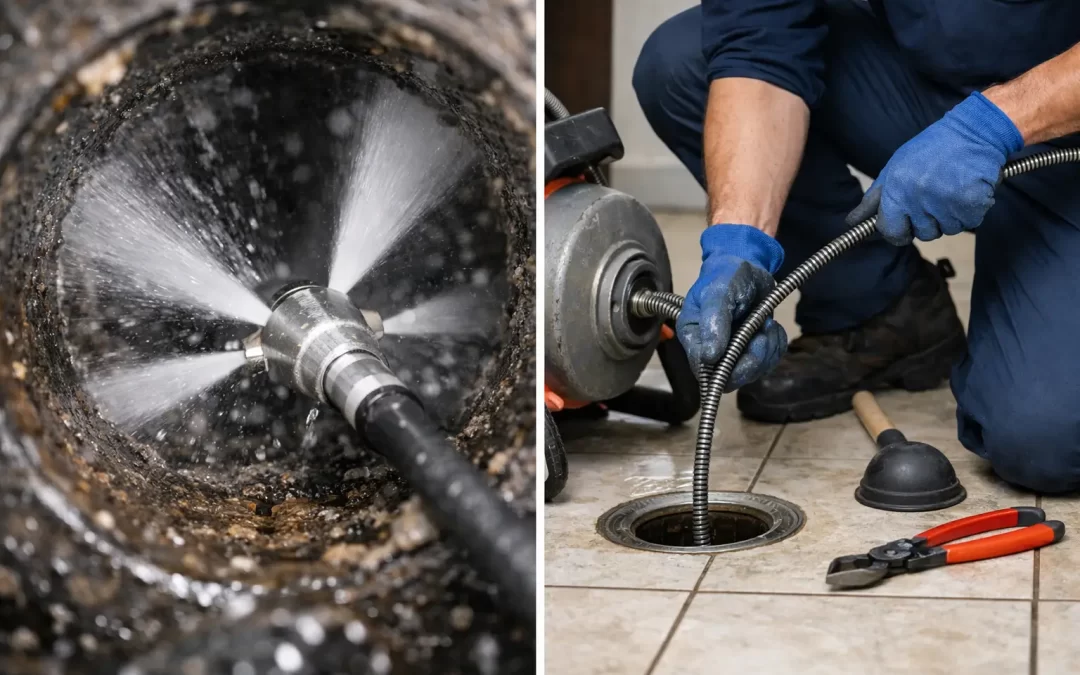
Drain snaking is the more familiar option. A plumber feeds a flexible cable into the drain and uses it to break through or pull apart the blockage. It is effective for many common clogs, especially when the goal is to restore flow quickly. If the line is blocked by hair, paper, or a localized obstruction, a snake can often solve the problem without much disruption.
Hydro jetting uses high-pressure water to scour the inside of the pipe. Instead of just punching a hole through the clog, it washes away sludge, grease, soap residue, and other debris clinging to the pipe walls. In the right situation, it is a much more complete cleaning method.
The short version is this: snaking opens a path, while hydro jetting cleans the line. That does not mean hydro jetting is always the better option. It means the method should match the problem.
When drain snaking makes the most sense
Drain snaking is often the practical first step for isolated clogs. If one bathroom sink is slow, one toilet is backing up, or one tub has a hair blockage near the drain, snaking is usually efficient and cost-effective. It is also a common choice when the clog is solid enough to grab, cut through, or break apart.
In many homes, this method works well because the issue is local, not system-wide. A snake can reach the problem area, clear it, and get the fixture usable again fast. That matters when you need same-day help and do not want a bigger service than the job calls for.
Snaking can also be a safer starting point when pipe condition is uncertain. Older drains, lines with previous repairs, or piping that may be fragile sometimes need a more cautious approach before high-pressure cleaning is considered. A good plumber will look at the age and material of the system before recommending the more aggressive option.
The trade-off is that snaking does not always remove all the buildup. If grease, scale, or sludge is coating the pipe wall, the snake may only cut a narrow opening through it. Water starts moving again, but the drain may clog again sooner because much of the residue is still there.
When hydro jetting is the better solution
Hydro jetting shines when the blockage is not just one object stuck in the line, but a heavy buildup that has narrowed the pipe over time. Kitchen drains with grease, soap-heavy shower lines, laundry drains, and main sewer lines with repeated backup issues are all strong candidates.
This method is especially useful for recurring drain problems. If you have had the same line snaked more than once and it keeps slowing down, that is usually a sign the pipe is not truly clean. Hydro jetting can remove the layer of debris that keeps catching new waste and causing repeat clogs.
It is also highly effective against tree root intrusion in certain sewer lines. A cable machine may cut through roots and restore flow, but hydro jetting can flush out the smaller root mass and leftover debris more thoroughly. That said, if roots are coming in through a damaged section of pipe, cleaning alone will not permanently solve it. The line may need repair after the blockage is cleared.
For homeowners dealing with frequent backups, bad drain odors, or lines that seem slow throughout the house, hydro jetting often gives a more complete result. It is not just about opening the pipe. It is about restoring as much of the interior diameter as possible.
The pipe condition matters more than people realize
One of the biggest mistakes in the hydro jetting vs drain snaking conversation is assuming every drain can handle either method. Pipe material, age, and overall condition matter.
Hydro jetting uses significant water pressure, and while it is safe for many sound drain and sewer lines, it is not automatically the best choice for every system. Older pipes that are cracked, heavily corroded, poorly connected, or already weakened need careful evaluation. In those cases, an experienced plumber may recommend snaking first or may advise a repair approach instead of pressurized cleaning.
Snaking is not risk-free either. In the wrong hands, a cable can scratch, catch, or damage certain lines, especially if the pipe is already compromised. The tool itself is only part of the equation. The condition of the line and the experience of the technician matter just as much.
That is why recurring drain issues should not be treated as a guessing game. If the same drain keeps failing, the goal should be to identify what is happening inside the pipe and choose the method that fits the actual problem.
Cost vs value: the cheaper option is not always cheaper
Homeowners naturally look at price first, and in many cases snaking costs less upfront than hydro jetting. For a basic clog, that makes sense. If the line clears well and the problem does not come back, there is no reason to pay for a more extensive service.
But repeat visits change the math. If a drain gets snaked every few months because the buildup never fully comes out, the lower-cost option can end up costing more over time. Hydro jetting often carries a higher initial price because it is a more intensive cleaning process, but it may save money if it prevents recurring service calls and water damage from backups.
This is where honesty matters. A trustworthy plumber should not push hydro jetting for every clog, and they should not default to snaking when the line clearly needs a deeper cleaning. The best recommendation is the one that solves the issue without overselling the fix.
Which method is better for common drain problems?
For bathroom sink and tub clogs caused by hair and soap near the fixture, snaking is often enough. For kitchen lines coated in grease and food residue, hydro jetting usually delivers a better long-term result. For toilets, snaking is commonly the first move because the blockage is often localized and solid.
For main sewer line issues, it depends on the cause. If there is a single obstruction, snaking may restore service quickly. If the line has sludge, scale, recurring backups, or root-related buildup, hydro jetting may be the better cleaning option. If the pipe is broken or collapsed, neither method is the full answer.
That last point is important. Not every clogged line is just dirty. Sometimes the real issue is a failing pipe, poor drainage slope, root entry, or a line that has reached the end of its useful life. Clearing the blockage is still necessary, but it is not always the complete fix.
How to know what your home likely needs
If this is your first clog and it is limited to one fixture, snaking is often the sensible place to start. If multiple drains are slow, the same line has clogged repeatedly, or you have a history of sewer backups, hydro jetting deserves serious consideration.
Homes with older plumbing systems also need a little more care in the decision. In some North Georgia homes, aging drain and supply systems go hand in hand. If you already know your plumbing is older or has had repeated issues, the smartest move is to have the line evaluated by a plumber who looks beyond the immediate clog.
At Greenlee Plumbing, that practical approach matters because the goal is not just to get water moving for a day or two. It is to recommend the fix that matches the pipe, the blockage, and the condition of the system.
The best drain cleaning method is the one that solves the problem without creating a new one. If your clog is simple, a snake may be all you need. If the line is coated with years of buildup, hydro jetting may be the service that finally gives you lasting relief. A good plumber should be able to tell the difference and explain it in plain language before the work starts.

Recent Comments