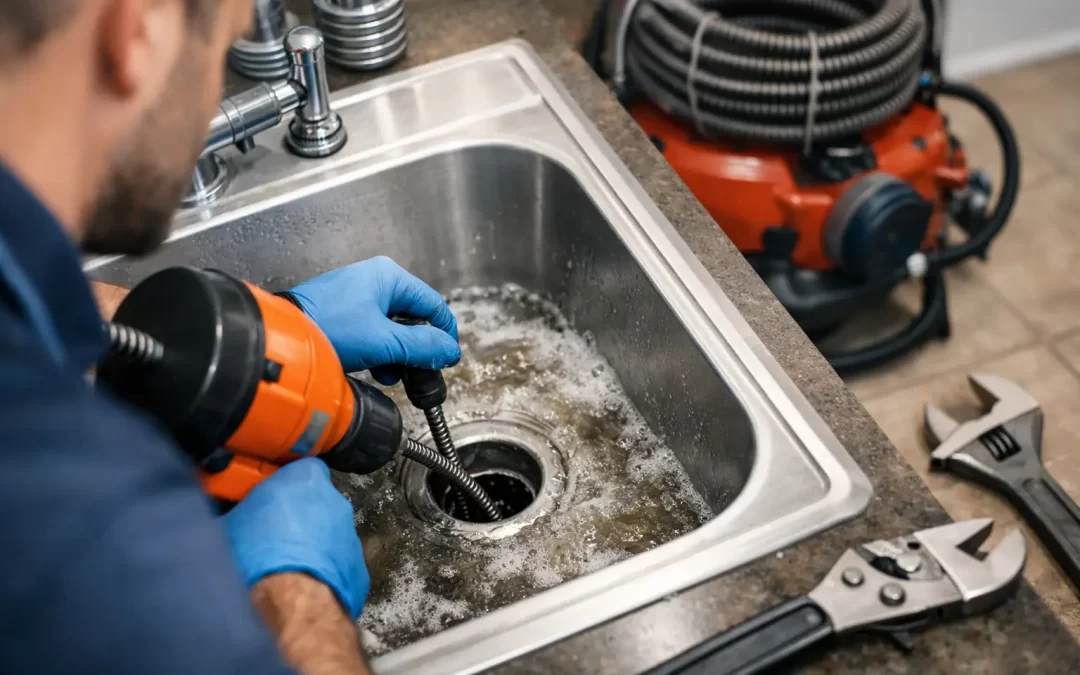
When the same sink, tub, or toilet keeps backing up, the problem usually is not bad luck. Drain cleaning for recurring clogs is about finding out why the blockage keeps coming back instead of clearing it just enough to get a few more days of use. If you are plunging the same fixture every week, there is almost always a deeper issue somewhere in the line.
A one-time clog is common. A repeat clog tells a different story. Hair, grease, soap scum, paper buildup, scale inside older pipes, or even a developing sewer line issue can all create a pattern where water slows down, drains poorly, and eventually stops. The frustrating part for homeowners is that the drain may seem fine right after a quick fix, then fail again as soon as more debris catches on the leftover blockage.
Why recurring clogs keep coming back
Most repeat drain problems happen because the original blockage was never fully removed. Store-bought liquid cleaners and basic plunging can sometimes open a narrow path through the clog, but they often leave material stuck to the pipe walls. That partial opening lets water pass for a while, but it also gives new debris something to grab onto.
Kitchen drains are a good example. Grease does not always harden in one solid lump. It can coat the inside of the pipe and collect food particles over time. You may flush the sink with hot water and think the problem is gone, but the buildup remains and keeps growing. Bathroom drains act the same way with hair, soap residue, and toothpaste.
Older plumbing systems can make things worse. If the inside of the pipe is rough from corrosion or mineral scale, clogs form faster because waste and debris do not flow as smoothly. In some homes, especially those with aging drain lines, recurring clogs are less about what goes down the drain and more about the condition of the pipe itself.
Signs you need more than a simple drain cleaning
A slow drain by itself does not always mean major trouble. But certain patterns point to a larger problem that needs a more complete diagnosis.
If multiple fixtures are draining slowly at the same time, the issue may be deeper in the branch line or main sewer line. If the toilet bubbles when the tub drains, or water shows up in one fixture when you use another, that usually means the blockage is affecting shared drainage. Foul odors can also be a clue that waste is sitting in the line instead of moving out properly.
Repeated backups after using a plunger or drain cleaner are another warning sign. So is a clog that returns quickly after professional snaking. In those cases, the drain may need a different cleaning method or a camera inspection to see whether the real issue is buildup, a damaged section of pipe, root intrusion, or a line with poor slope.
Drain cleaning for recurring clogs: what actually works
The right fix depends on what is causing the blockage and where it is located. There is no single method that works best for every drain.
For isolated clogs close to the fixture, mechanical snaking is often effective. A drain machine can break through hair, soap residue, and compacted waste that a plunger cannot reach. But if the line has heavy grease or sludge coating the pipe walls, snaking may only punch a hole through the center. That restores flow, but it may not stop the clog from returning.
That is where hydro jetting can make a big difference. This method uses high-pressure water to scour the inside of the pipe, removing grease, debris, and buildup more completely than a cable alone. For recurring clogs in kitchen lines, laundry drains, and some sewer lines, it can be the difference between temporary relief and a real reset. That said, hydro jetting is not ideal in every situation. If a pipe is badly deteriorated or already compromised, the line should be evaluated first.
Camera inspection is often the missing piece when clogs keep returning without a clear reason. It allows a plumber to see whether the problem is buildup, roots, a sag in the line, a broken section, or another condition that cleaning alone will not solve. That saves time and helps avoid paying for the same service over and over without getting a lasting result.
The most common sources of repeat drain problems
In bathrooms, hair is the usual suspect, but it rarely acts alone. Hair combines with soap and residue to form dense clogs that cling to the sides of the pipe. In homes with several people using the same shower, this can build up faster than many homeowners expect.
In kitchens, grease is the biggest repeat offender. Even if you do not pour bacon grease down the sink, oils from cooking, sauces, dairy, and food scraps still leave residue behind. Garbage disposals can make this worse by grinding food into smaller particles that travel farther before sticking inside the line.
Toilets that clog often may point to excess paper use, flushable wipes, or a toilet with weak performance. But if the toilet is backing up regularly and proper use has not changed, the drain line itself may be partially obstructed.
Main sewer line problems are more serious. Tree roots, heavy buildup, or a damaged section of pipe can cause recurring clogs throughout the home. In that case, the symptom may show up first in the lowest drain, often a basement or first-floor shower, tub, or toilet.
When recurring clogs signal a pipe problem
Sometimes the drain is not just dirty. Sometimes the line is failing.
Homes with older galvanized or heavily scaled piping can experience repeated clogging because the usable opening inside the pipe becomes smaller and rougher over time. Water may still move, but not efficiently. Debris catches more easily, and cleaning offers only short-term improvement.
This is one of those situations where it depends on the overall condition of the plumbing. If one problem drain has a localized blockage, cleaning is usually the right step. But if multiple drains are giving you trouble and the piping is old, the smarter long-term move may be repairing or replacing sections of the system rather than paying for repeated service calls.
That is especially true when recurring clogs are paired with other signs like poor water flow, discolored water, leaks, or a history of plumbing repairs. A clogged drain and an aging pipe system do not always go together, but when they do, treating only the clog can become expensive.
What homeowners should avoid
Chemical drain cleaners are one of the biggest mistakes we see. They can damage certain pipes, create safety hazards, and still fail to remove the full blockage. Even when they seem to work, they often only soften part of the clog.
It is also easy to overuse a plunger or small hand auger without solving the real issue. That is not because those tools are useless. They just have limits. If the clog is deeper in the line or caused by buildup along the pipe walls, basic tools may only provide temporary relief.
Ignoring the pattern is another costly mistake. If a drain backs up once, monitor it. If it backs up again soon after, that is the time to get it checked. Waiting too long can turn a manageable cleaning job into an overflow, water damage issue, or a larger sewer repair.
How to prevent recurring clogs after cleaning
Once the line is properly cleaned, a few habits can help keep it that way. In bathrooms, use drain screens where practical and remove visible hair regularly. In kitchens, keep grease, coffee grounds, and fibrous food waste out of the sink. Run plenty of water when using the disposal, but do not assume the disposal can handle everything.
For homes with a history of buildup, occasional maintenance can make sense, especially on heavily used kitchen or main lines. The right timing depends on the age of the plumbing, how the home is used, and what has caused trouble in the past. There is no benefit in over-servicing a line that is working well, but there is real value in staying ahead of a known repeat issue.
If you live in an older home in areas like Hall, Cobb, Forsyth, Gwinnett, or Cherokee County, recurring drain problems are worth taking seriously because aging piping and line wear can play a bigger role than many homeowners realize.
A drain that keeps clogging is telling you something. The faster you identify whether it is buildup, misuse, or a pipe problem, the better your chances of fixing it once and avoiding the next backup.

Recent Comments