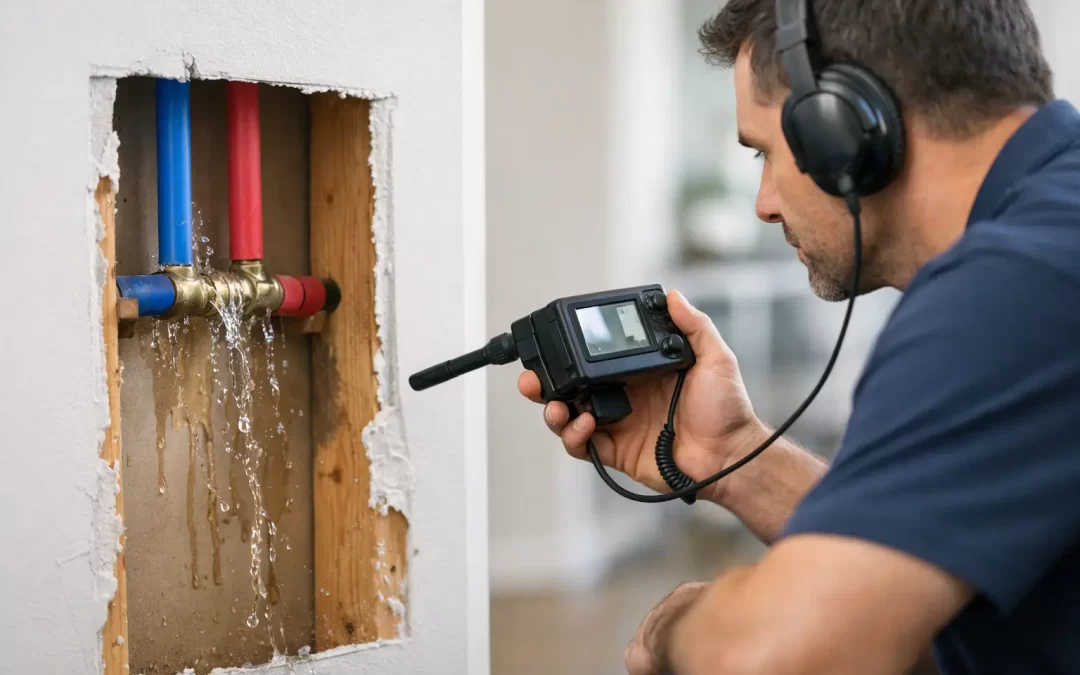
A wet baseboard, a musty smell in one room, or a water bill that suddenly jumps – those are usually the first signs that send homeowners looking for leak detection without wall damage. The good news is that in many cases, a skilled plumber can narrow down the problem without cutting into drywall just to start the search. The better news is that finding the leak early often means less mess, lower repair costs, and a much smaller chance of major structural damage.
Homeowners usually picture leak detection as a process that involves punching holes all over the house until someone gets lucky. That used to be closer to the truth than it should have been. Today, experienced plumbers have better ways to track moisture, listen for water movement, and test plumbing systems before opening anything up.
How leak detection without wall damage actually works
The goal is simple: confirm whether a leak exists, narrow down its location, and understand how serious it is before making any unnecessary cuts. That starts with a basic but important step – reading the symptoms correctly.
A hidden plumbing leak does not always show up where the pipe is actually failing. Water can travel along framing, floor joists, or concrete before it becomes visible. A stain on one wall may be caused by a leak several feet away. That is why good detection is less about guessing and more about gathering evidence.
Professional plumbers often begin with pressure testing and fixture isolation. If a leak is on a supply line, testing different sections of the plumbing system can help determine whether the problem is in a hot line, cold line, branch line, or another area entirely. That process can rule out large portions of the house before any wall is touched.
Acoustic listening equipment is another common tool. Pressurized water escaping from a pipe creates sound, even behind drywall or under a slab. Trained technicians can use that sound to help locate the leak path. It is not magic, and it is not perfect in every house, but it is often accurate enough to avoid unnecessary demolition.
Thermal imaging can also help, especially with hot water line leaks or moisture patterns inside walls and ceilings. Infrared cameras do not see water directly. They detect temperature differences, which can point to wet materials or active flow behind finished surfaces. In the right conditions, that gives the plumber a strong visual clue without opening the wall first.
Moisture meters are used to confirm where water has spread. If one section of drywall or flooring is holding much more moisture than the surrounding area, that tells a story. Combined with pressure testing and visual signs, it helps create a much clearer map of what is happening.
When non-invasive leak detection works best
Leak detection without wall damage is most effective when the leak is active enough to leave patterns but not so destructive that access is already obvious. Small supply line leaks, pinhole leaks, and certain slab leak symptoms are often good candidates for non-invasive testing.
This approach is also especially useful in finished homes where preserving drywall, tile, cabinets, or flooring matters. If you have recently remodeled a bathroom or basement, careful detection can save a lot of frustration. The same is true in multifamily properties, where one leak may affect several units and random wall cuts create more disruption than the leak itself.
Older homes can benefit too, but there is a trade-off. Aging copper, galvanized piping, or polybutylene systems may have more than one weak point. In those cases, finding one leak cleanly is helpful, but it may not solve the bigger issue. If the piping material is already failing in multiple areas, repeated spot repairs can become more expensive than addressing the system as a whole.
What a plumber can often find before opening a wall
In many homes, an experienced plumber can determine whether the problem is likely coming from a supply line, a drain line, a fixture connection, or water entering from outside. That distinction matters because the repair strategy is different for each one.
Supply line leaks are usually under pressure, so they tend to show up even when no fixture is being used. If your water meter moves while everything is off, that is a strong clue. Drain leaks behave differently. They usually appear only when a sink, shower, tub, or appliance is actually draining. Sometimes what looks like a pipe leak is really a failed shower pan, bad caulking, or water escaping around a fixture.
That is why the best leak detection process is not just about tools. It is about knowing how houses are plumbed, how water behaves, and which test makes sense before moving to the next one. A rushed diagnosis can still lead to unnecessary wall damage, even with good equipment.
When a small opening is still the right call
There are times when leak detection without wall damage can get you very close, but not all the way to the final repair point. That is normal. Detection and repair are not the same thing.
If a plumber has used testing equipment to pinpoint the leak to one small section of wall, a targeted opening may be the most efficient next step. The difference is that now you are opening one controlled area instead of cutting into multiple rooms. That is still a win for the homeowner.
This matters a lot with slab leaks and second-floor leaks. Water can travel in ways that make the visible damage misleading. Narrowing the issue first means less disruption and a better chance of fixing the real source on the first visit.
Why hidden leaks should not be left alone
A small hidden leak rarely stays small for long. Even a slow drip behind a wall can damage insulation, soften drywall, swell trim, stain ceilings, and create conditions for mold growth. Over time, it can also weaken subfloors and framing.
Then there is the plumbing side of the problem. If a hidden supply line leak gets worse, water pressure can drop and failure can become sudden instead of gradual. In homes with older piping, one leak may be the warning sign that more trouble is coming.
For homeowners in North Georgia, that is especially worth paying attention to if your house has older copper, galvanized lines, or polybutylene. In those systems, leak detection can solve the immediate problem, but it may also reveal that the larger issue is pipe age and material failure rather than one isolated defect.
Choosing the right plumber for non-invasive leak detection
Not every plumbing company approaches leak detection the same way. If protecting your walls and finishes matters, ask how they diagnose hidden leaks before repairs begin. A reliable plumber should be able to explain the process in plain language, including what they can test, what they can reasonably confirm, and when opening a wall may still be necessary.
You also want someone who understands the bigger picture. If the leak is tied to an aging plumbing system, the right recommendation may not be another patch. It may be a reroute, a section replacement, or in some homes, a full repipe. That is not about upselling. It is about avoiding a cycle of repeated leaks and repeated drywall repairs.
At Greenlee Plumbing, that practical approach matters because many leak calls are not just leak calls. They are early warnings of a plumbing system that is starting to fail. Finding the leak cleanly is important, but so is being honest about whether the repair is likely to last.
The smartest first step if you suspect a hidden leak
If you notice unexplained moisture, peeling paint, warped flooring, or a water bill that no longer makes sense, do not wait for obvious damage. Shut off fixtures if needed, check whether the water meter is moving when the house is idle, and get the problem evaluated while it is still manageable.
The best case is simple: the issue is minor, the location is identified quickly, and the repair stays contained. Even when the answer turns out to be more involved, early detection gives you options. And when leak detection is handled the right way, those options usually come with a lot less mess than homeowners fear.
A hidden leak is stressful enough without turning your house into a demolition site first. Good plumbing diagnosis should reduce uncertainty, not add to it.

Recent Comments