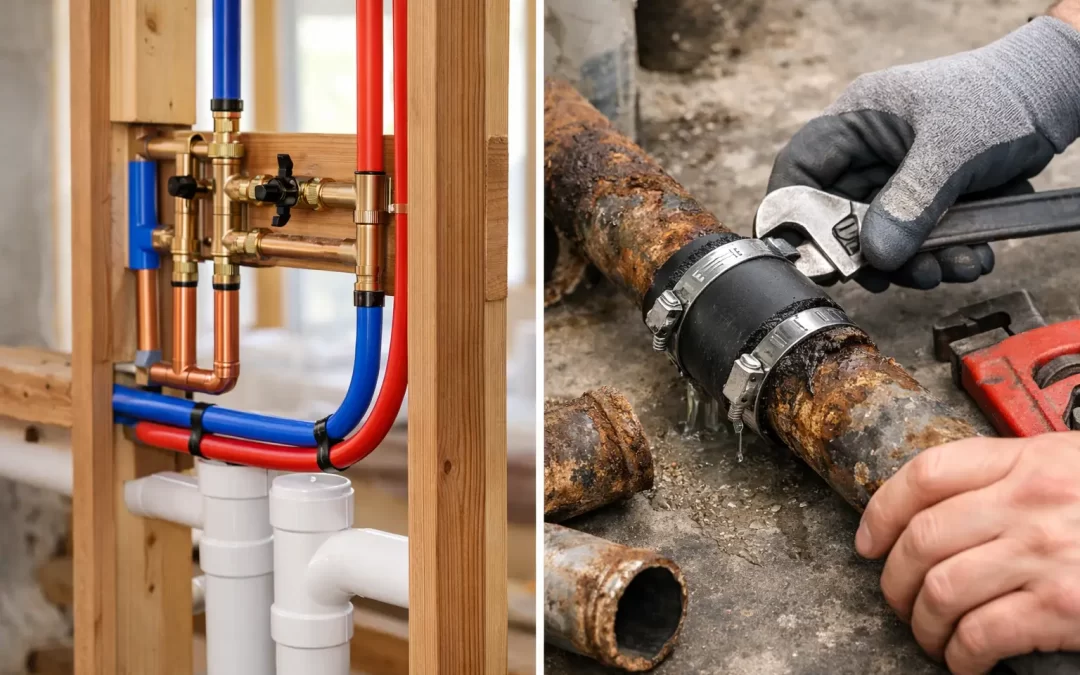
A plumber cuts open drywall, fixes one leaking section, and the water is back on by dinner. A month later, another leak shows up on the other side of the house. That is usually when the real repipe vs pipe repair question starts.
For some homes, a targeted repair is absolutely the right call. For others, repeated fixes only stretch out the problem and add more cost, more wall cuts, and more stress. The best choice depends on the condition of the piping system, the age of the home, the pipe material, and how often plumbing issues keep coming back.
Repipe vs pipe repair starts with the bigger picture
Pipe repair solves a specific problem in a specific location. If a single section of pipe is damaged by a nail, a frozen line, a bad fitting, or an isolated leak, repairing that area can be fast and cost-effective. In the right situation, there is no reason to replace pipes that are otherwise in good shape.
A repipe is different. Instead of treating one failure point, it replaces most or all of the home’s water supply piping. That approach makes more sense when the plumbing system is aging out, made from problem materials, or showing signs of widespread wear. It is a bigger job up front, but it can remove the cycle of repeated leaks and patchwork repairs.
Homeowners often want a simple rule, but this decision is rarely that clean. A single leak in a newer system is not the same as the fourth leak in a 30-year-old system with low pressure and discolored water.
When pipe repair is the smart option
Repair is often the better choice when the problem is isolated and the rest of the system is dependable. That might mean a small leak under a sink, a damaged section in an exposed basement ceiling, or a single failed connection in a newer home.
In these cases, repair keeps costs lower and limits disruption. If the piping material is still considered reliable and there are no signs of larger system problems, a focused fix is usually the practical answer.
Repair also makes sense when the issue is clearly tied to one event rather than overall pipe condition. For example, accidental damage during remodeling, a localized slab leak, or one bad valve connection does not automatically mean the whole house needs new piping.
That said, good plumbers look beyond the visible leak. If the leak you can see is likely just one symptom of a broader issue, a repair may only buy time.
Signs a repair may be enough
A repair is more likely to hold up well if the home has had few plumbing issues, water pressure is consistent, water color is normal, and the damaged area is limited to one accessible section. The pipe material matters too. A newer PEX or copper system with one isolated problem is very different from an older galvanized or polybutylene system with multiple warning signs.
When a repipe makes more financial sense
A repipe can feel like a big step, but there are situations where it is the more cost-effective move. If you are calling for leak repairs every year, or every few months, you are no longer dealing with a one-time problem. You are managing a failing system.
Repeated repairs add up fast. Each visit may solve the immediate issue, but every new leak brings labor, wall access, patching, possible flooring damage, and the risk of water loss or mold. At a certain point, the money spent on piecemeal fixes starts getting too close to the cost of replacement.
This is especially true in homes with outdated materials. Polybutylene is a well-known example. It was used in many homes for years, but it has a history of failure that makes replacement the better long-term strategy. Older galvanized pipes can also create ongoing trouble, especially when corrosion inside the line starts affecting flow and water quality.
If the house has low water pressure throughout, recurring pinhole leaks, rust-colored water, noticeable corrosion, or a history of multiple repairs, a repipe usually deserves serious consideration.
Repipe often solves more than leaks
One reason homeowners choose repiping is that it improves daily performance, not just reliability. New supply lines can help restore water pressure, reduce the chance of hidden leaks, improve water flow to showers and fixtures, and remove concerns tied to aging pipe materials.
That matters if you are planning to stay in the home. It also matters if you are remodeling kitchens or bathrooms, updating an older property, or trying to reduce maintenance headaches in a multifamily building.
The pipe material can decide the answer for you
Not all plumbing systems age the same way. If your home has copper, the next step depends on the condition of the pipe. Copper can last a long time, but it is not immune to pinhole leaks, corrosion, water chemistry issues, or poor past workmanship. One leak in copper does not always point to full replacement, but a pattern of leaks often does.
Galvanized pipe is less forgiving. Once corrosion builds inside the pipe, flow drops and internal deterioration keeps moving. Repairing one section does not fix the restriction and wear in the rest of the system.
Polybutylene is the clearest case. If a home still has polybutylene water lines, replacement is usually the stronger recommendation. Repairing one failed section may get the water back on, but it does not change the risk built into the rest of the piping. That is why companies with true repipe experience, including Greenlee Plumbing, often guide homeowners toward modern PEX A or PEX B options when they are dealing with older failing systems.
How to weigh short-term cost against long-term risk
The hardest part of repipe vs pipe repair is that repair almost always looks cheaper on day one. And sometimes it is the right move. But day-one price is not the whole story.
If the home needs one repair and then runs trouble-free for years, repair wins. If the home needs that repair, then another one in six months, and then another leak behind a bathroom wall, the math changes quickly.
A full repipe costs more at the start, but it can reduce emergency calls, lower the chance of water damage, and give homeowners a clearer long-term plan. For property managers and owners of older homes, predictability matters. A known investment is often easier to manage than surprise plumbing failures.
There is also the stress factor. Many homeowners can live with one repair. Very few want to keep wondering where the next leak will show up.
What a good plumber should evaluate before recommending either option
This decision should never be based on guesswork or pressure. A reliable plumbing company will look at the full condition of the system before recommending repair or repiping.
That includes the age of the plumbing, pipe material, leak history, visible corrosion, water pressure problems, access to the damaged area, and whether the issue appears isolated or system-wide. The goal is not to sell the biggest job. The goal is to give you the most practical fix for the home you actually have.
If a plumber immediately jumps to full replacement without explaining why, ask more questions. The same goes for anyone who keeps patching leaks without addressing obvious signs of larger failure. Good advice should match the condition of the house, your budget, and how long you plan to stay there.
Repipe vs pipe repair for older North Georgia homes
In many older homes around North Georgia, the decision comes down to how much life is really left in the system. If the house still has outdated pipe materials or a long history of leaks, the safer investment is often repiping. If the issue is limited and the plumbing system is otherwise sound, a repair may be all you need.
Homes with crawl spaces, finished basements, or slab foundations can add another layer to the decision because access affects both labor and the impact of future leaks. A repair in a difficult location may solve today’s problem, but if similar failures are likely elsewhere, replacement can still be the smarter move.
The right choice is the one that stops the cycle
If your plumbing problem is isolated, pipe repair can be the fastest and most affordable answer. If your home keeps showing the same warning signs, a repipe is often the move that finally puts the issue to rest.
The real question is not just what fixes the leak you have today. It is what gives you the best chance of avoiding the next one. A clear evaluation from an experienced plumber should leave you with confidence, not confusion. When the recommendation matches the condition of the system, you can move forward knowing you are protecting your home, your budget, and your peace of mind.

Recent Comments