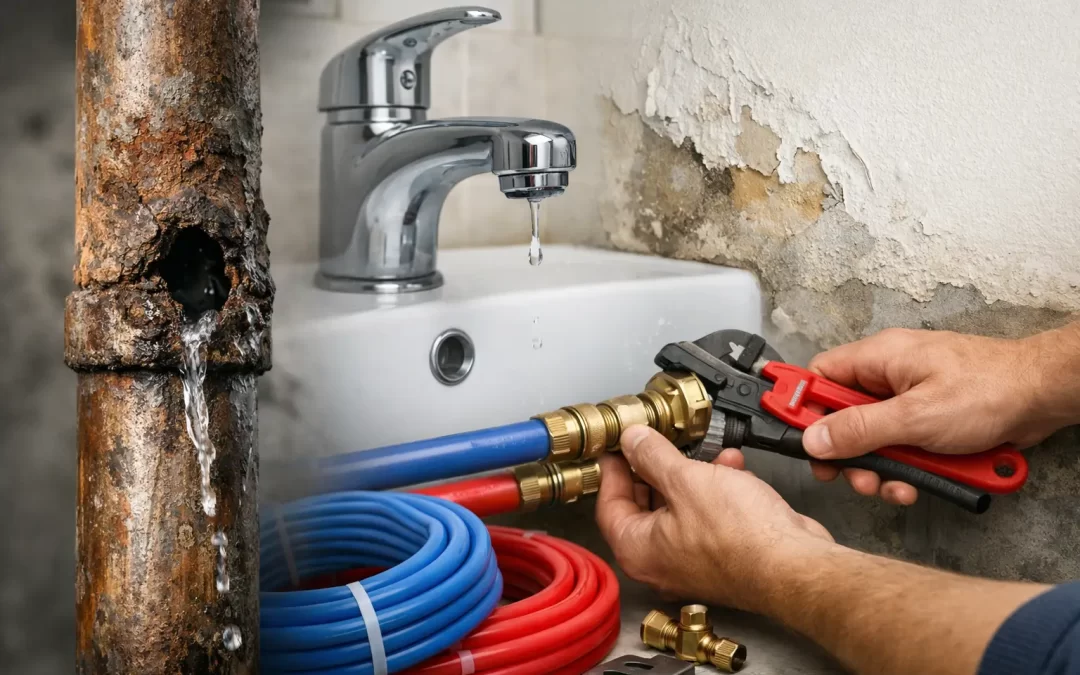
If your shower pressure drops when the washing machine starts, or you keep patching one leak after another, your plumbing system may be telling you something bigger. Many of the most common signs your house needs repiping start small – a stain on the ceiling, discolored water, a noisy pipe in the wall – and then turn into expensive damage if they are ignored.
Repiping is not the first answer to every plumbing problem. Sometimes a single leak repair or a fixture replacement is all you need. But when the same issues keep showing up across the house, it is worth looking at the entire piping system instead of treating each symptom one by one.
What repiping usually means
Whole-house repiping means replacing old or failing water supply lines with new piping throughout the home. In many older homes, that often involves removing outdated materials such as galvanized steel, aging copper with recurring pinhole leaks, or polybutylene that has become a liability over time. Modern repipes are commonly done with PEX, which is durable, cost-effective, and well-suited for residential plumbing upgrades.
The main goal is not just to stop one leak. It is to restore reliability to the whole system so you are not living with constant repairs, hidden water damage, and unpredictable plumbing performance.
1. You keep getting leaks in different places
A single isolated leak does not automatically mean your house needs repiping. Pipes can be damaged by age, water chemistry, movement, or a bad connection at one section. But if leaks keep happening in different rooms or at different branches of the system, that is a strong sign the piping is wearing out as a whole.
This is especially true if you have already paid for multiple repairs over the past year or two. At some point, continued spot repairs stop being the cheaper option. If the system is deteriorating throughout, fixing one section only buys time until the next weak point fails.
When repeated repairs stop making sense
The tipping point is usually a mix of frequency and cost. If you are constantly calling for leak repairs, cutting into drywall, or dealing with moisture cleanup, a full replacement can be more practical than continuing to chase individual failures.
2. Your water pressure is consistently low
Low water pressure is one of the most frustrating plumbing problems for homeowners. It can make showers weak, slow down laundry, and turn simple daily tasks into a hassle. Sometimes the issue is local, such as a clogged aerator or a failing pressure regulator. But if low pressure is showing up at multiple fixtures, old supply piping may be the real cause.
Galvanized pipes are a common example. Over time, corrosion builds up inside the pipe walls and narrows the opening that water can flow through. What looks fine from the outside can be heavily restricted on the inside.
If pressure has gradually gotten worse over the years, not just overnight, that points more toward system aging than a one-time blockage.
3. Your water looks rusty, brown, or yellow
Clean water should look clean. If it comes out tinted brown, red, or yellow, especially from both hot and cold lines, deteriorating pipes may be contaminating the flow. Galvanized piping is a common culprit because internal rust can break loose and discolor the water.
There are a few exceptions. If discoloration only happens briefly after water has been shut off, sediment may have been stirred up. If it only appears on the hot side, the water heater may be involved. But if the issue is recurring and widespread, it is one of the clearest signs your house needs repiping or at least a serious plumbing evaluation.
Discolored water is not just unpleasant. It can stain sinks, tubs, clothing, and signal that your piping system is breaking down from the inside.
4. Pipes are old and made from problem materials
Sometimes the biggest warning sign is not what your plumbing is doing today. It is what your home is piped with.
Polybutylene is one of the best-known examples. It was used in many homes for a period of time and developed a reputation for premature failure. The problem is that these pipes can look acceptable right up until they split or leak. That makes them risky, especially for homeowners who want to avoid sudden water damage.
Galvanized steel is another material that often causes trouble as it ages. Copper can last a long time, but older copper systems with repeated pinhole leaks may also be nearing the point where replacement makes more sense than ongoing repair.
Older materials change the risk calculation
If your home has outdated piping, you do not always need to wait for a major break before acting. In many cases, planned repiping is the less stressful and less expensive route compared to dealing with an emergency failure later.
5. You hear unusual noises in the walls
Pipes make some normal sounds, especially when water starts or stops. But loud banging, rattling, whistling, or persistent ticking behind walls can point to bigger issues. In some homes, noises are caused by loose pipe supports or pressure problems. In others, they are related to restricted or deteriorating pipes struggling to handle normal flow.
Noise by itself is not enough to diagnose the need for repiping. But when it shows up alongside low pressure, leaks, or old pipe materials, it adds to the overall picture that the system may be failing.
6. Your water has a bad taste or smell
Taste and odor issues are not always caused by the home’s pipes, but they should never be brushed off. Metallic-tasting water can point to pipe corrosion. Musty or unpleasant smells may come from plumbing-related issues that need to be checked quickly.
If multiple fixtures have the same problem and it is not tied to the municipal supply, your plumbing system should be evaluated. Aging pipes can affect not only reliability, but also the quality of the water coming through them.
7. Stains, soft spots, or moisture keep showing up
Not every pipe leak announces itself with a burst line. Many plumbing failures are slow and hidden. A yellow ceiling stain, bubbling paint, warped flooring, or a soft drywall patch may be the first visible sign that a supply line has been leaking behind the scenes.
If this happens once, you may be dealing with one damaged section. If it happens in more than one area of the house, that suggests a broader problem. Hidden leaks are one of the biggest reasons homeowners end up wishing they had acted sooner. By the time visible damage appears, water may have been escaping for weeks or longer.
8. Your plumbing system cannot keep up with the house
Some homes were built for a different era of water use. A family may now have more bathrooms, more appliances, and more daily demand than the original plumbing system handles well. If pressure drops significantly when multiple fixtures run, or parts of the home feel like they never get adequate flow, repiping can be part of a larger upgrade that brings the system up to modern expectations.
This is especially relevant during remodeling. If walls are already open and the home has aging or failure-prone piping, it is often smarter to replace the lines then instead of finishing the renovation and reopening everything later.
When signs your house needs repiping are not so obvious
Some homeowners expect repiping to be an obvious last resort, but the warning signs are often gradual. Pressure slowly weakens. Leaks become more common. Water quality changes a little at a time. Because the decline is slow, it is easy to normalize problems that should not be considered normal.
That is why a whole-system assessment matters. The right decision depends on the age of the home, the pipe material, the pattern of failures, and how much money is already being spent on repairs. A newer home with one localized issue may need a simple fix. An older home with repeated leaks, corrosion, and outdated materials often benefits more from a full replacement.
Why waiting can cost more
Putting off a repipe can feel like the budget-friendly choice, especially if the plumbing is still functioning most days. The issue is that failing pipes rarely improve with time. They usually become more fragile, more restrictive, and more expensive to manage.
The real cost is not just the next leak repair. It is drywall damage, flooring damage, mold concerns, lost time, and the stress of dealing with plumbing failures on the system’s schedule instead of your own. For many homeowners, planned repiping offers more control, fewer surprises, and a better long-term value than reactive repairs.
Greenlee Plumbing works with homeowners who are tired of repeated pipe problems and want a clear answer on whether repair or repiping makes more sense. If your home is showing several of these warning signs, getting the system evaluated now can help you avoid a much bigger mess later.
The best time to deal with aging pipes is usually before they force the issue. If your plumbing has been giving you the same warning over and over, it may be time to listen.

Recent Comments