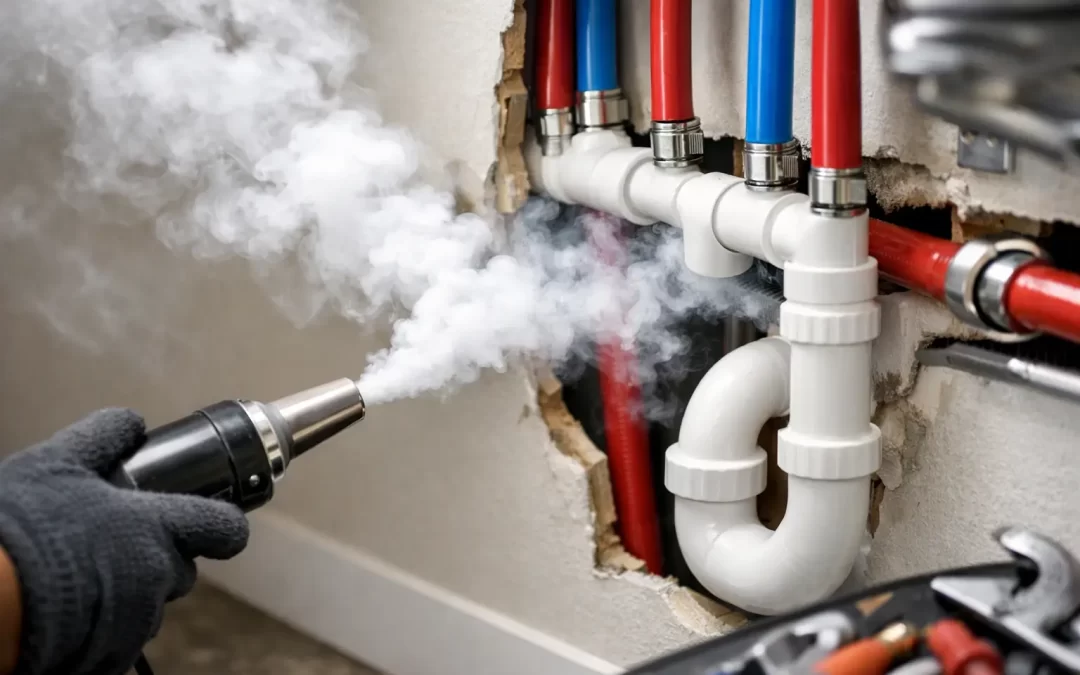
You may not see a plumbing leak, but you can usually spot the damage it leaves behind – musty odors, damp walls, bubbling paint, slow drains, or water showing up where it should not. A smoke test for plumbing leaks is one of the most effective ways to track down hidden openings in drain, waste, and vent piping when the source is not obvious.
This is not the same as testing a water supply line under pressure. A smoke test is mainly used to find breaks, loose fittings, bad seals, cracked vents, and hidden leak paths in a plumbing system that carries air and wastewater. When homeowners or property managers are dealing with sewer odors, unexplained moisture, or recurring drainage issues, this test can save time and prevent a lot of guessing.
What a smoke test for plumbing leaks actually does
In simple terms, a plumber introduces safe, non-toxic smoke into parts of the drain and vent system. That smoke travels through the piping and escapes anywhere the system is not sealed the way it should be. If there is a crack behind a wall, a loose toilet seal, a damaged vent stack, or an opening under a sink or slab area, the smoke often shows the exact location.
That matters because many plumbing leaks are not active water sprays. Some are slow seepage points, failed seals, or damaged drain lines that only show symptoms after moisture, odor, or staining has already spread. A smoke test helps narrow the problem down quickly, especially when visual checks have not produced a clear answer.
For homeowners, the biggest benefit is accuracy. Instead of opening up large sections of drywall or chasing multiple possible causes, the plumber can often identify the source with much less disruption.
When this type of test makes sense
Not every leak calls for smoke testing. If a supply line is actively dripping under a sink, the problem is usually visible and straightforward. But there are situations where smoke testing becomes especially useful.
One common example is sewer gas odor inside the home. If a bathroom smells bad even after cleaning, or a basement has a persistent sewer smell with no obvious drain backup, the issue may be a hidden defect in the drain or vent system. Smoke can reveal where that odor is escaping.
It is also helpful when moisture keeps appearing around walls, floors, or ceilings and standard leak checks have ruled out obvious water supply problems. In older homes, especially those with aging drain systems or previous repair work, hidden openings can develop over time. Smoke testing can also help with recurring drain problems that seem to return even after cleaning.
In multifamily properties, this test can be especially valuable because odors and hidden drain issues may travel between units. Finding the exact failure point matters when you want to solve the problem without unnecessary demolition or repeated service calls.
How the process usually works
A professional smoke test starts with isolating the section of the plumbing system being evaluated. Openings may be temporarily sealed so the smoke can move through the piping instead of escaping immediately from normal fixtures. A smoke-generating machine then pushes visible smoke through the system.
As the smoke fills the piping, the plumber watches for where it exits. That might be around a toilet base, from a wall cavity, near a vent termination, through a cracked fitting, or from an outdoor cleanout or buried line area. The visible smoke provides a strong clue about where the system is compromised.
The process itself is usually fast. In many cases, the actual test does not take long once the setup is complete. What varies is the complexity of the plumbing layout and how easy it is to access the suspected problem area.
Homeowners sometimes worry when they hear the word smoke, but the test smoke used by professionals is designed for this purpose and is generally safe when handled correctly. It is meant to make a hidden path visible, not create heat or fire risk.
What a smoke test can find
A smoke test for plumbing leaks is best at finding issues in drain and vent piping, not every kind of plumbing failure. That distinction matters.
It can often identify cracked drain lines, separated joints, worn toilet wax seals, leaking vent connections, broken cleanout caps, and openings where sewer gas or moisture is escaping. It may also reveal bad connections in remodel areas where plumbing was altered and never fully sealed.
What it usually does not do is confirm the condition of a pressurized water line inside the wall. If you have high water bills, reduced pressure, or signs of a slab leak, a plumber may need different leak detection methods. Sometimes smoke testing is one piece of the larger diagnostic process, not the whole answer.
That is why experience matters. The right plumber will match the test to the symptom instead of forcing one method onto every problem.
Why hidden drain leaks are often misdiagnosed
A lot of plumbing problems overlap. A homeowner may notice a stain on the ceiling and assume a supply pipe is leaking. In reality, the issue could be a drain line above that only leaks when a fixture is used. A sewer odor might seem like a septic problem when the real cause is a failed vent connection inside a wall.
This is where hidden drain leaks waste time and money. Surface symptoms do not always tell you where the defect started. Some leaks only appear under certain conditions, like when a tub drains, when a toilet is flushed, or when a washing machine sends a large volume of water through the system.
Smoke testing works well in these cases because it helps expose the path of escape. Instead of replacing the wrong fixture or opening up the wrong room, you get a clearer diagnosis from the start.
Older homes and recurring plumbing issues
If you own an older home, recurring leak and odor problems should not be brushed off as normal. Aging materials, past patchwork repairs, and decades of movement can all affect drain and vent piping. A crack may be small, but it does not take much to let sewer gas out or let moisture into framing and drywall.
This is also worth paying attention to if you are already dealing with broader pipe issues. In some homes, especially those with outdated plumbing materials, one repair leads to another because the system is reaching the end of its service life. A targeted diagnostic test can help you decide whether you are dealing with a localized repair or a sign of a bigger problem.
For companies like Greenlee Plumbing that handle both leak detection and full repiping work, that difference matters. A small isolated drain issue can often be repaired cleanly. A larger pattern of aging pipe failure may call for a more permanent upgrade.
What happens after the test
Once the leak or opening is identified, the next step depends on the location and severity. Sometimes the fix is simple, like replacing a toilet seal or repairing a visible vent connection. In other cases, the plumber may need to access piping behind a wall, below a floor, or in a crawl space.
The good news is that a clear diagnosis usually leads to a more efficient repair. You are not paying for repeated guesswork or multiple return visits to test different theories. You can make a better decision because you know what failed and where it failed.
There is also value in catching these problems early. Hidden drain leaks do not always flood a room, but they can lead to wood rot, mold growth, damaged finishes, and persistent air quality issues over time. The sooner the source is confirmed, the easier it is to limit the damage.
Should you ask for a smoke test?
If you are dealing with sewer smells, unexplained moisture, recurring drain-related symptoms, or a leak that has not been clearly identified, it is reasonable to ask whether smoke testing is the right next step. The answer depends on the plumbing system, the symptoms, and whether the issue points to drain and vent piping versus water supply lines.
A good plumbing company will tell you when this method makes sense and when another diagnostic approach would be more useful. That honesty matters, especially when you are trying to avoid unnecessary cost and disruption.
When plumbing problems are hidden, speed is important, but accuracy is what really saves money. The right test can turn a frustrating mystery into a repair plan you can trust. If your home keeps showing signs of a leak with no clear source, getting a professional diagnosis now is a lot easier than dealing with major water damage later.

Recent Comments