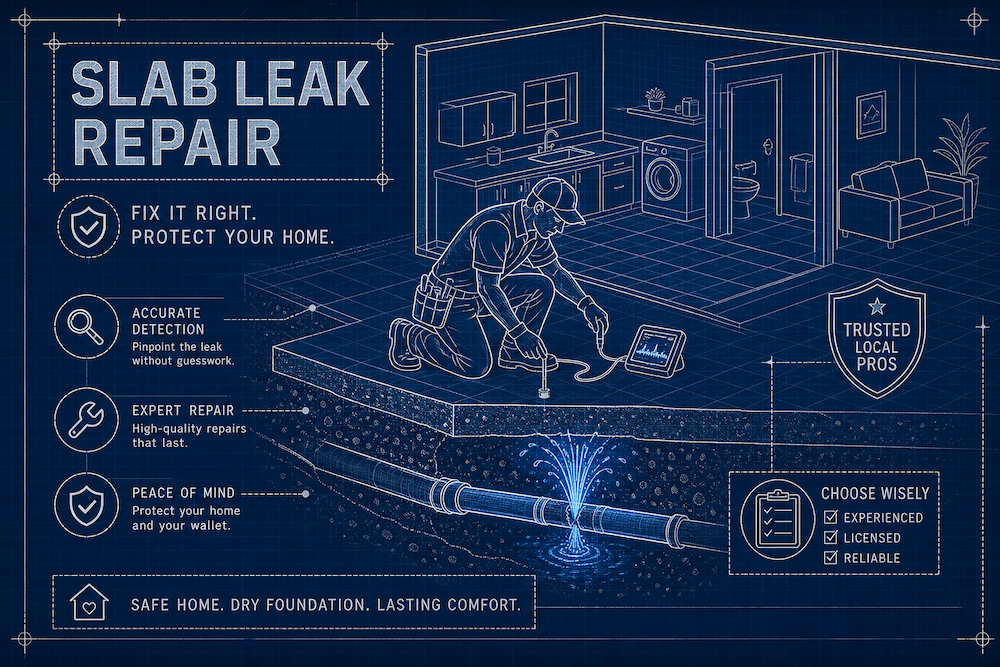
A slab leak is not a “call when you get around to it” kind of problem. If you need the best slab leak repair services near me, act quickly, water leaking under your foundation puts pressure on concrete, feeds mold, and silently destroys flooring and walls for months before you ever notice it. By the time a homeowner calls a plumber, the damage is usually well ahead of the repair. The longer it runs, the worse it gets.
The hard part is not just finding the leak. It is finding the right company to handle it without turning your home into a construction site in the process. Not every plumber who picks up the phone is equipped for this work. Slab leak repair requires specialized detection tools, specific repair methods, and a contractor who understands the difference between a precise fix and an expensive guess. At Greenlee Plumbing, a family-owned plumbing company serving North Georgia, slab leak calls are among the most common the team receives, and most homeowners who call have already burned time with a contractor who was not qualified for the job. Here is exactly how to find, vet, and hire the right company before the problem gets bigger.
Signs you actually have a slab leak under your home
A sudden jump in your water bill is usually the first clue. If your monthly bill climbs noticeably with no change in your household habits, water is going somewhere it should not. Under a concrete slab is the hardest place to catch it, and it often runs undetected for weeks because there is nothing visible above ground to signal a problem.
The physical signs inside the house are harder to miss once you know what to look for. Warm or hot spots on your floor, the sound of running water when every fixture is off, damp carpet near the walls, cracked tile, and unexplained mold along baseboards all point toward a leak below the slab. Hot water line leaks are particularly telling. They heat the concrete surface just enough to feel underfoot, most noticeably on hardwood and tile where heat transfers readily.
Delays worsen the problem significantly. Water under pressure erodes the soil that supports your foundation. That soil shift is what turns a pipe repair into a foundation stabilization job. What could have been a targeted fix becomes a much larger, more expensive project. Speed matters here, and recognizing these signs early is the surest path to a manageable repair bill.
In Georgia specifically, the issue is compounded by the state’s expansive red clay soil. That clay expands when wet and contracts when dry, which creates a constant cycle of ground movement beneath the slab. Older homes built before the 1990s with copper or galvanized steel pipe systems are particularly vulnerable, because decades of that soil movement wear through pipe walls and separate joints that were never designed to flex.
How to choose the best slab leak repair services near me
Any legitimate slab leak plumber in Georgia should hold an active state plumbing contractor license through the State Construction Industry Licensing Board. The Master Plumber license is required for contracting work, and you can verify any license status online through Georgia’s Secretary of State professional licensing lookup. Ask for the license number before anyone starts work and run it yourself. A contractor who hesitates to provide that number is a red flag, verify the license yourself using the state lookup before going any further.
Beyond licensing, require proof of general liability insurance and current workers’ compensation coverage. These are not optional extras. They protect you if something goes wrong during the job, and any established company will have them on hand without being asked twice. Bonded status adds another layer of financial protection and is worth asking about for larger jobs.
A key technical differentiator is detection method. Qualified slab leak repair companies use electronic leak detection equipment, acoustic sensors, or thermal imaging to locate the leak precisely before any concrete gets touched. This is the difference between cutting a six-inch opening in the right spot and tearing up ten square feet on a guess. Greenlee Plumbing uses electronic detection tools designed to pinpoint slab leaks with accuracy, which keeps demolition small and repair time short.
A written warranty on the completed work is the final test of accountability. At Greenlee Plumbing, every slab leak repair is backed by a 1-year workmanship warranty covering defects in the repair itself. That kind of commitment separates contractors who stand behind their work from those who cash the check and disappear. When reviewing any warranty, check that it specifies what labor and parts are covered, what the exclusions are, and how to file a claim if something goes wrong.
Slab leak repair cost and methods: what to expect in 2026
Trenchless slab repair (pipe lining)
Trenchless slab repair, also called pipe lining, is the lowest-disruption option available. A liner is inserted inside the existing pipe without extensive excavation. The job is often completed in a single day, and your yard and flooring stay mostly untouched. In 2026, this method runs between $500 and $3,500 for residential jobs, or roughly $80 to $250 per linear foot. For an isolated leak on an otherwise sound pipe system, this gets the house back to normal fastest. For more detail on expected expenses, see this slab leak repair cost guide. You can also compare broader approaches in a trenchless vs traditional sewer repair comparison to understand trade-offs in downtime and restoration.
Traditional excavation and spot repair
Traditional excavation and spot repair involves opening the concrete slab leak repair area directly above the leak, replacing the damaged pipe section, and patching the concrete. Costs for this method generally fall between $700 and $5,000, depending on depth, access difficulty, and how much surface restoration is required. Expect three to seven days for active repair work, plus additional time for concrete to cure. The disruption is real: open trenches, dirt, equipment, and noise are part of the process.
Full repiping
Full repiping is sometimes the most cost-effective long-term fix for older homes with widespread pipe deterioration. Rather than repeatedly repairing what is already failing underground, a full repipe reroutes new pipe through walls or above-slab pathways. This method runs $4,000 to $15,000, which is a significant upfront cost. For a home with aging copper or galvanized pipe throughout, that cost can be more cost-effective over time than repeated emergency repairs.
Red flags that should end the conversation immediately
Any contractor who quotes a price without first performing slab leak detection near me, or wherever the job is located, is guessing. A written estimate should spell out the detection method, what is included in the repair scope, what surface restoration is covered, and what would trigger a price change. “We will figure it out when we get in there” is not an acceptable answer on a job that involves your foundation. Vague language in a quote becomes a dispute after the work is done.
**A permit is not required for a slab leak repair**
A contractor who immediately recommends full excavation without running any diagnostic tools is cutting corners at your expense. The right repair method depends on where the leak is, what caused it, and the condition of the surrounding pipe. Detection always comes before recommendation. If someone is telling you what they will do before they know where the leak is, that is a red flag.
Questions to ask before any company touches your foundation
Start with the quote itself. Ask the contractor to walk through it line by line. What does detection cost, and is that fee credited toward the total if you hire them for the repair? What does patching or surface restoration include? Is cleanup part of the scope? Every item that goes undefined in a quote is a potential add-on charge after the work is already underway.
Ask directly about emergency slab leak repair response and how it affects the rate. For an active slab leak, water is running continuously and every hour adds to the damage. Get a clear answer on response time and any after-hours pricing before urgency takes the decision out of your hands. A company that cannot give you a straight answer on this is not organized enough for a job that moves fast.
The more specific their questions, the more accurate the quote. A serious contractor will ask about your home’s age, the pipe material if you know it, the suspected leak location, and whether you have had previous slab repairs. For homes built before the 1990s in North Georgia, the answer to “what pipe material” is often copper or galvanized, and a qualified contractor will factor that into the repair approach immediately. A company that quotes without asking anything is giving you a number, not an estimate.
How to make the final call with confidence
The right slab leak repair company brings three things: proper detection equipment to find the leak before cutting, a written scope that defines exactly what the job includes, and a warranty that holds them accountable after they leave. Miss any one of those and you are carrying risk that does not need to be yours.
If you are searching for the best slab leak repair services near me in North Georgia, including Hall, Gwinnett, Forsyth, North Fulton, or Cobb County, Greenlee Plumbing handles slab leak detection and repair using electronic methods designed to locate the problem before a single square inch of concrete gets touched. The goal is always the smallest footprint for the most accurate fix, completed by a licensed, insured team. Response availability for active leaks is subject to scheduling; contact the team directly to confirm timing for your situation.
Call with the symptoms you are seeing and the team will walk you through exactly what the next step looks like. No vague estimates, no pressure to commit before you understand what you are paying for. For leak detection services near me that prioritize accuracy over speed-of-shovel, that is how a job this serious should be handled.

Recent Comments