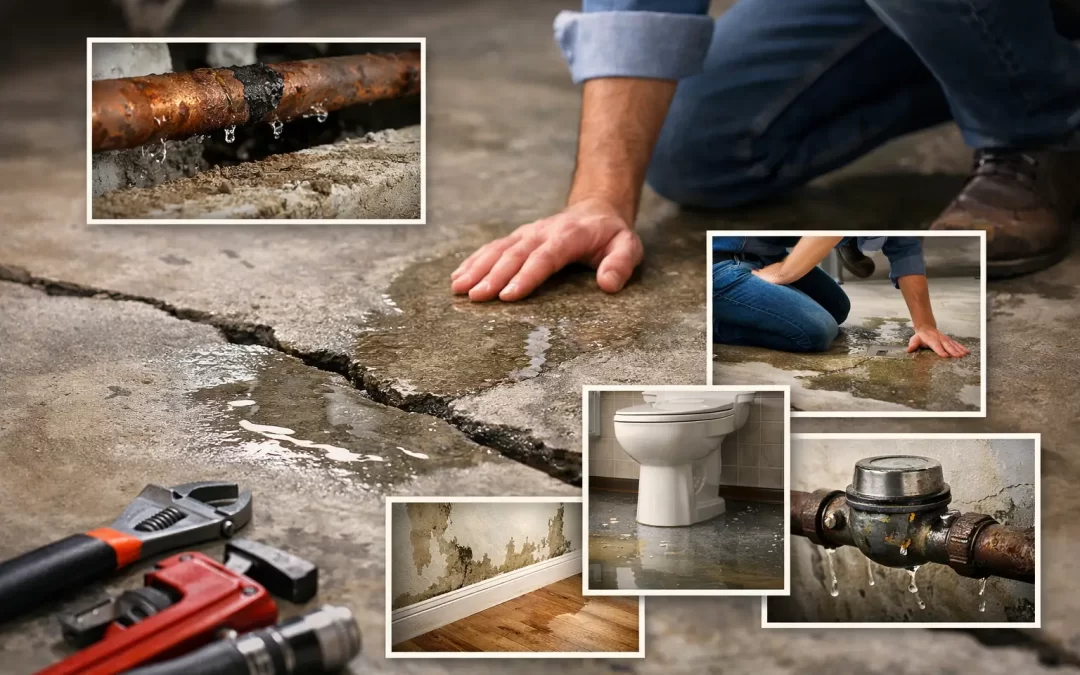
A slab leak usually does not announce itself with a burst pipe and a puddle in plain sight. More often, it starts with a higher water bill, a warm patch on the floor, or the sound of running water when everything is turned off. Those early slab leak warning signs are easy to brush off, but waiting can lead to flooring damage, mold, foundation movement, and a much more expensive repair.
For homeowners in North Georgia, this is one of those plumbing problems where fast action matters. A leak under a concrete slab can keep spreading for days or weeks before the damage becomes obvious. The good news is that the signs are often there if you know what to look for.
What is a slab leak?
A slab leak is a water line leak that develops beneath the concrete foundation of a home. In many houses, the plumbing system runs under or through the slab, and when one of those pipes cracks, corrodes, or rubs through, water begins escaping below the surface.
Some slab leaks involve hot water lines, which can create warm spots on the floor. Others affect cold water lines and stay hidden longer. Either way, the problem is underground, which makes professional leak detection important. You may see the symptoms in the home long before you ever see the actual source.
The most common slab leak warning signs
1. Your water bill jumps for no clear reason
A sudden increase in your monthly water bill is one of the most common signs of a hidden leak. If your usage habits have not changed but the bill keeps climbing, water may be escaping under the slab around the clock.
This sign matters even more if the increase is steady over two or three billing cycles. A small slab leak can waste a surprising amount of water, and because it is hidden, the leak may continue until someone investigates it.
2. You hear water running when no fixtures are on
If the house is quiet and you still hear water moving through the pipes, do not ignore it. A soft rushing or hissing sound behind walls or beneath the floor can point to a pressurized line leaking below the foundation.
This is one of those symptoms that homeowners second-guess. Refrigerators, HVAC systems, and water heaters can make normal sounds, so it depends on the pattern. If the sound is consistent and happens when no sinks, toilets, or appliances are using water, it is worth checking.
3. There are warm spots on the floor
A hot water slab leak often creates a section of flooring that feels noticeably warmer than the surrounding area. Tile tends to reveal this first, but it can sometimes be felt through hardwood, laminate, or carpet as well.
Warm spots do not always mean a slab leak, but they should never be dismissed. If you notice unexplained heat in the floor and your water bill is also higher than normal, those two signs together are a strong clue.
4. Flooring starts to buckle or warp
Moisture under the slab can work its way upward and affect finished flooring. Hardwood may cup or buckle. Laminate can swell at the seams. Carpet may feel damp or develop a musty smell.
Because this damage often shows up gradually, people sometimes assume it is humidity or an old flooring issue. In reality, water coming up from below can be the real cause. The longer it continues, the more likely you are to face both plumbing repairs and flooring replacement.
5. You notice damp areas with no obvious source
Wet spots on the floor, damp carpet, or moisture near baseboards without a visible plumbing fixture nearby can point to water migrating from below the slab. The location of the moisture does not always match the exact leak location, which can make this issue confusing.
Water follows the path of least resistance. That means a leak under one section of the home may show up several feet away, especially if it travels through cracks, expansion joints, or low areas beneath the flooring.
6. Mold or mildew keeps returning
A slab leak can create the kind of hidden moisture that mold loves. If you clean mildew from a baseboard, closet, or lower wall and it comes back, something deeper may be feeding it.
This is especially true when the area does not have a usual moisture source like a shower or exterior door. A persistent musty smell is often a clue before visible mold appears.
Slab leak warning signs that affect the whole plumbing system
7. Water pressure drops unexpectedly
If the water pressure in your sinks or showers drops and there is no known issue with the municipal supply, a leak in the plumbing system could be reducing pressure before water reaches your fixtures.
Pressure changes alone do not confirm a slab leak. They can also be caused by aging pipes, mineral buildup, or pressure regulator problems. But when lower pressure shows up along with high bills or damp flooring, the bigger picture starts to point underground.
8. Your water heater seems to run nonstop
With a hot water slab leak, the water heater may work harder because heated water is escaping before it ever reaches the faucet. You might notice longer recovery times, inconsistent hot water, or a unit that seems to be running more than usual.
This symptom is easy to miss because people often blame the water heater itself. Sometimes the heater is not the problem at all. It is reacting to a leak in the hot water line under the slab.
9. Cracks or shifting begin to show up
In more advanced cases, prolonged water loss under the foundation can affect the soil beneath the slab. That can contribute to floor cracks, wall cracks, or subtle shifting inside the home.
Not every foundation crack is caused by plumbing, and not every slab leak causes structural movement. Still, if new cracks appear alongside moisture issues or unexplained water usage, it is smart to have both the plumbing and the foundation conditions evaluated quickly.
What causes a slab leak in the first place?
There is no single cause. In some homes, older copper lines develop corrosion over time. In others, pipes may be damaged by shifting soil, poor installation, abrasion against concrete, or years of pressure changes.
Water quality can also play a role. So can the age of the plumbing system. Homes with outdated or failure-prone piping materials often face a higher risk of repeated leaks, which is one reason some homeowners eventually move from spot repairs to a full repipe.
What to do if you notice slab leak warning signs
Start with a basic check. Turn off all water-using fixtures and appliances, then see if your water meter continues moving. If it does, that is a strong sign that water is leaking somewhere in the system.
After that, the best next step is professional leak detection. Slab leaks are not guesswork jobs. A licensed plumber can use specialized equipment to narrow down the source without tearing up flooring just to hunt for it. That matters because the repair approach depends on the leak location, pipe material, and overall condition of the system.
Sometimes a direct repair makes sense. In other cases, rerouting the line is the better long-term fix. If the home has multiple problem areas or aging pipes, a larger repiping plan may save money over time compared to repeated slab access repairs.
Why acting early saves money
A slab leak rarely gets cheaper by waiting. Even a slow leak can damage flooring, saturate materials, increase mold risk, and drive up utility bills every day it continues.
Early detection also gives you more repair options. When the problem is caught sooner, the affected area is often smaller and the repair can be more controlled. Once damage spreads, the plumbing fix may be only part of the total cost.
For homeowners who want straight answers without a sales pitch, this is where experience matters. A company like Greenlee Plumbing can help determine whether you are dealing with a single isolated leak or a bigger pipe issue that needs a long-term solution.
If something in your home feels off – a warm floor, a rising bill, damp carpet, lower pressure – trust that instinct and get it checked. Plumbing problems under a slab do not stay small for long, and catching them early can protect both your home and your budget.

Recent Comments