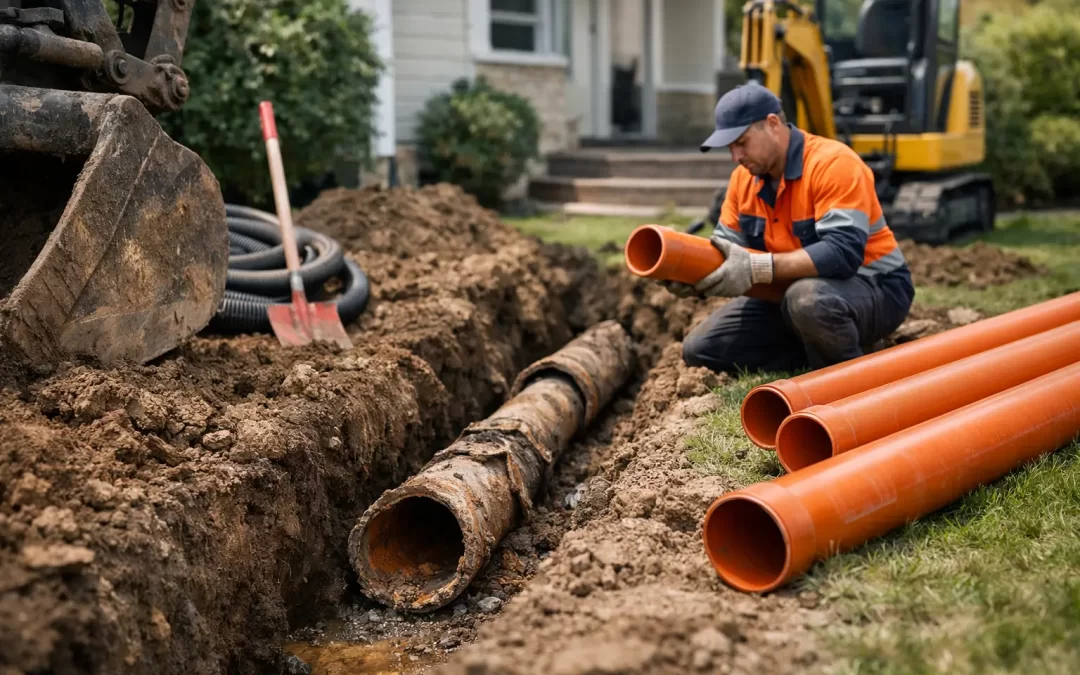
A sewer problem rarely starts with a dramatic collapse. More often, it shows up as the toilet that keeps backing up, the tub that drains slower every month, or a wet patch in the yard that does not make sense. If you are wondering when to replace sewer line piping instead of repairing it again, the answer usually comes down to the age of the line, the type of damage, and how often the problem keeps coming back.
For homeowners, this is one of those decisions that feels expensive no matter what. But waiting too long can turn a manageable project into interior water damage, repeated service calls, foundation concerns, or a yard that stays soggy and smells like sewage. The right move is not always full replacement right away. Sometimes a repair buys you years. Sometimes it just delays a bigger and more costly failure.
When to replace sewer line issues stop being a repair job
A single clog does not mean your sewer line needs to be replaced. Even a bad clog can come from grease, wipes, or a localized blockage close to the house. What raises concern is a pattern. If you are having recurring backups in multiple drains, especially on the lowest level of the home, that points to a main line problem rather than a simple fixture clog.
Frequent drain cleaning is another red flag. If the line has been cleared more than once and symptoms keep returning, there may be a structural issue inside the pipe. Root intrusion, offset joints, cracks, belly spots, and heavy scale buildup can all make a line fail again even after it has been opened up.
Age matters too. Older sewer lines made from clay, cast iron, Orangeburg, or other outdated materials are simply more likely to have reached the end of their useful life. In many homes, especially those that have never had the sewer line updated, deterioration happens gradually until one day the system cannot keep up.
The clearest signs a sewer line may need replacement
The most obvious warning sign is sewage backing up into tubs, showers, or floor drains. When wastewater has nowhere to go, it takes the lowest available exit. If more than one fixture is affected at the same time, that usually points to the main sewer line.
Persistent foul odors inside or outside the home also matter. A damaged sewer line can let sewer gas escape through cracks or separated connections. Some homeowners notice it near a crawl space, basement, or along one side of the yard.
You should also pay attention to your lawn. A section of grass that is unusually green, fast-growing, muddy, or sunken can indicate an underground leak. In some cases, the ground above a broken line begins to settle because the soil has been washed away or softened.
Slow drains throughout the house are another sign. One slow sink is usually a local issue. A house full of sluggish drains, gurgling toilets, and bubbling sounds from other fixtures means the main line may be restricted or failing.
Then there is the camera inspection result. This is often what settles the question. If the footage shows a collapsed section, heavy root mass, multiple cracks, severe corrosion, or a pipe that has gone out of shape, replacement becomes much easier to justify.
Repair or replace depends on the type of damage
This is where homeowners often get frustrated. They want a simple yes or no answer, but sewer lines do not work that way.
If the problem is isolated to one section of pipe and the rest of the line is in good condition, a repair may be the smartest option. For example, one cracked segment or one root intrusion point does not always mean the entire line is bad. In that case, targeted work can restore function without replacing everything.
Replacement makes more sense when the line has multiple weak points or when the material itself is failing. An old cast iron line with scaling and corrosion throughout the run may keep giving trouble even if one area is repaired today. The same goes for clay pipe with repeated root intrusion at several joints. You can clear roots again and again, but if the line design and condition keep inviting them back, the problem is not really solved.
Cost over time should be part of the conversation. A lower repair bill can feel better in the moment, but two or three repeat visits, yard disruption, and emergency backups add up quickly. In many cases, replacement is the more economical choice over the long run because it removes the ongoing failure points.
Age and material play a bigger role than many homeowners expect
A sewer line can look fine from the outside while failing underground. That is why the age of the home and the pipe material matter so much.
Clay sewer lines are prone to root intrusion because of the joints. Cast iron can corrode from the inside and narrow over time. Orangeburg, which was used in some older homes, is known for deforming and deteriorating. Even lines that have not fully collapsed may no longer perform reliably.
If your home is several decades old and the sewer line is original, replacement becomes more likely once serious symptoms begin. At that stage, the question is often not whether the line will fail, but how long you want to keep managing the consequences.
What homeowners should do before deciding
The smartest first step is to get a clear diagnosis. That means more than just having a drain opened. A proper evaluation should identify whether the issue is a blockage, root intrusion, a broken section, standing water in the pipe, or widespread deterioration.
Once you know what is actually happening, ask the practical questions. Is the problem isolated or spread across the line? Has this happened before? Is the pipe material still dependable? Will a repair likely hold, or are you likely to be calling again in six months?
For property managers and multifamily owners, downtime matters even more. A recurring sewer issue can affect more than one unit, create tenant complaints, and interrupt normal operations. In those situations, replacement is often easier to defend because reliability matters just as much as immediate cost.
When to replace sewer line piping sooner rather than later
There are times when waiting is the risky choice.
If sewage is entering the home, if the line has collapsed, or if the yard is showing signs of leakage and soil movement, replacement should move up the priority list quickly. The same is true if the line has been snaked or cleared repeatedly with only short-term relief.
Another reason to act sooner is remodeling. If you are already investing in a bathroom renovation, basement finish, or major plumbing work, it can make sense to address a failing sewer line before new finishes are in place. No homeowner wants to install new flooring or walls only to tear things up later because the main line failed.
For homes in North Georgia with aging plumbing systems, it is also worth looking at the sewer line as part of the larger picture. If water lines, drains, or other core plumbing components are nearing the end of their service life, a proactive approach can prevent one problem from stacking on top of another.
The goal is reliability, not just a temporary fix
Most homeowners are not looking for the cheapest option. They are looking for the option that stops the stress. That is an important difference.
A good sewer line recommendation should be based on what gives you dependable service, protects the home, and avoids repeat emergencies. Sometimes that is a repair. Sometimes replacement is the only honest answer. A trustworthy plumber should explain both paths clearly, including the trade-offs, expected lifespan, and likely future risk.
At Greenlee Plumbing, that straightforward approach matters because sewer decisions are too expensive to guess at. Homeowners need real answers, not pressure.
If your drains are backing up, your yard smells off, or the same problem keeps returning, do not wait for a full failure to make the decision for you. The best time to deal with a sewer line is when you still have options.

Recent Comments