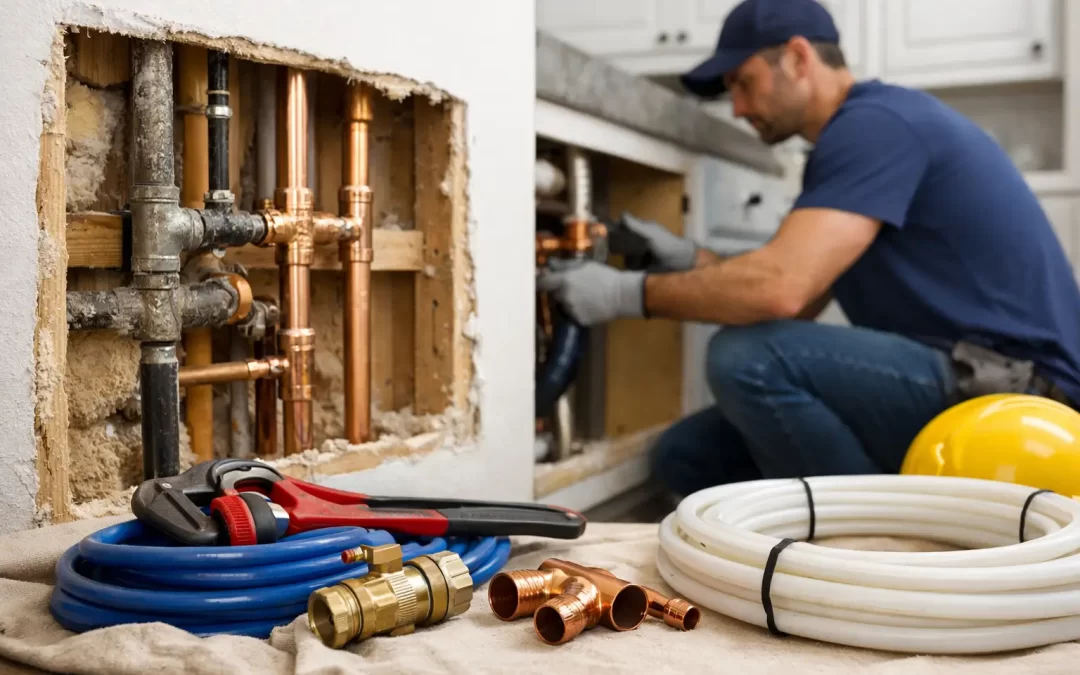
If your home is about to be repiped, the biggest surprise usually is not the work itself. It is how much easier the job feels when you know how to prepare for repiping before the crew arrives. A little planning protects your floors, lowers stress, and helps the project move faster from the first shutoff to the final cleanup.
Repiping is a major plumbing upgrade, but it does not have to feel chaotic. In most homes, the right preparation comes down to access, communication, and realistic expectations. If you know what areas the plumbers need to reach and what parts of your routine may be interrupted for a day or two, the process becomes much more manageable.
How to prepare for repiping before work starts
The first step is confirming the scope of the job. Ask which parts of the house are being repiped, what pipe material is being installed, and whether the work includes all hot and cold water lines or only specific sections. That matters because preparation looks different for a full-house repipe than it does for a targeted pipe replacement.
You should also ask where the crew will need access. In many homes, that means bathrooms, the kitchen, laundry room, water heater area, crawl space, basement, utility room, and sometimes sections of wall or ceiling where lines are routed. Knowing this ahead of time lets you clear those spaces without rushing the night before.
If you work from home or manage a busy household, this is the time to think about timing. Repiping often involves periods without running water, and there may be construction noise while old lines are removed and new ones are installed. If anyone in the home has medical needs, mobility concerns, or a schedule that depends heavily on water access, mention that early so everyone can plan around it.
Clear access to plumbing fixtures and work areas
One of the most helpful things you can do is make the home easy to work in. Plumbers can move faster and more carefully when sinks, vanities, tubs, toilets, and water heater connections are accessible.
Start by removing items from under sinks in kitchens, bathrooms, and laundry rooms. That includes cleaners, trash cans, storage bins, and anything breakable. If the crew needs to reach shutoffs, supply lines, or wall penetrations, clutter under cabinets slows everything down.
Next, move furniture, rugs, and decor away from walls where plumbing lines may run. In some homes, supply pipes pass through walls behind vanities, near tubs, inside laundry walls, or above ceilings. You do not need to empty the whole house, but giving a few feet of working room in key areas makes a real difference.
Fragile wall hangings should come down in nearby work zones. Vibrations from cutting and opening access points can shake loose frames or shelves. The same goes for valuables stored in closets or cabinets that back up to bathrooms or kitchens.
Plan for water shutoffs and daily routine changes
The hardest part for many homeowners is not the installation. It is the temporary inconvenience. If you are figuring out how to prepare for repiping, think through your normal day and where water use matters most.
Fill a few containers or pitchers with drinking water ahead of time. It is also smart to have water available for pets. If the project will affect the home for most of the day, plan simple meals that do not require much cleanup.
Bathroom access may be limited at certain stages. In some homes, one fixture can stay active longer than others, but that depends on the layout of the plumbing system. Ask your plumber what to expect so you can make arrangements if needed, especially for children, older adults, or tenants in a multifamily setting.
Laundry, dishwashing, and bathing may need to wait until service is restored. If that sounds inconvenient, remember that short-term disruption is usually the trade-off for replacing pipes that may already be leaking, corroding, or failing behind walls.
Protect your home before the crew arrives
A professional repipe team will take steps to protect the property, but homeowners can help by handling a few basics first. That starts with making sure pathways are open from the entry point to the work areas. Remove shoes, baskets, plant stands, and small furniture that could get in the way.
If you have pets, make a plan to keep them secure and comfortable. Open doors, unfamiliar workers, and construction noise can be stressful for animals. Setting up a quiet room away from the work zones is often the safest option.
For households with kids, it helps to set expectations in advance. Repiping involves tools, pipe materials, and work areas that should stay clear. If possible, arrange for children to be out of the main work zone during the busiest parts of the job.
You may also want to cover or store nearby items that collect dust easily. Some repipes require access through drywall, and while good crews keep the site controlled, minor dust is part of the process in many homes.
Know what will happen during the repipe
Repiping is not the same in every house. A newer two-story home in Alpharetta may have a different layout and access strategy than an older ranch in Marietta or a home with a finished basement in Cumming. The age of the house, pipe material, and wall configuration all affect the approach.
In general, the process starts with shutting off the water and preparing access to the existing supply lines. Old piping is disconnected in sections, then new lines are run to fixtures throughout the home. Once connections are made, the system is tested, fixtures are checked, and any open areas are addressed according to the scope of work.
Some homeowners expect the house to be unusable from start to finish. Usually, that is not the case. There is disruption, and there is noise, but experienced repipe crews are used to working efficiently in occupied homes. The smoother the access and communication, the smoother the project tends to go.
Questions to ask before repiping day
Good preparation is not only about moving furniture. It is also about knowing what to expect. Before the work begins, ask how long the job is expected to take, when water will be off, which rooms are affected first, and whether there are any special prep steps for your floor plan.
You should also ask what kind of cleanup is included and whether any items need to stay completely untouched. This helps avoid confusion on the day of service. Clear answers up front usually mean fewer surprises once the job is underway.
If your home has had recurring slab leaks, low water pressure, discolored water, or old polybutylene, galvanized, or worn copper lines, ask whether those existing conditions change the timeline or the routing strategy. In repiping, details matter. Two homes that look similar can require very different solutions once the plumbing layout is evaluated.
What not to do before a repipe
Do not wait until the last minute to clear cabinets and work zones. That creates delays and increases the chance that something valuable gets left in the way.
Do not assume all parts of the house will stay fully functional during the work. Even if the crew stages the project carefully, you should expect some interruption and plan accordingly.
Finally, do not focus only on the inconvenience. Repiping is often one of the most valuable plumbing upgrades a homeowner can make, especially if the existing system is prone to leaks or poor performance. Better water flow, more dependable pipes, and fewer emergency repair risks are usually worth a short period of disruption.
After the repipe is finished
Once the work is complete, take time to walk through the home with the plumber. Turn on faucets, flush toilets, check showers, and ask about anything that feels unfamiliar. This is the best time to learn where the main shutoff is, what was replaced, and what to watch for over the next few days.
You may notice improved water pressure or more consistent flow right away. In homes with aging or restricted pipes, that change can be significant. At the same time, it is normal to have a few adjustment questions after a major plumbing upgrade, which is why working with an experienced repipe specialist matters.
At Greenlee Plumbing, homeowners often tell us the project felt much less stressful than they expected once they understood the process and prepared the house properly. That is really the goal. When you know how to prepare for repiping, you give the crew room to do quality work and give yourself a much easier path through a major upgrade.
A repipe day is never just another day at home, but it also does not have to turn your house upside down. Good prep, clear expectations, and the right plumbing team make a big difference.

Recent Comments